History, Tradition & Why Today’s Creations Have No Limits
There are traditions that taste like Christmas… and then there are traditions that feel like stepping into another world.
The gingerbread house is both.
Warm, spiced, and deeply nostalgic, these edible little cottages have traveled through centuries — from medieval German markets to modern-day kitchens filled with candy, creativity, and imagination. Today, “gingerbread houses” range from elegant European cottages to elaborate candy mansions inspired by movies, pop culture, and fantasy.
But before gumdrops and rainbow shingles, the story started with something much simpler — and much older.
A Sweet Beginning: The 16th-Century Origins
Gingerbread itself dates back thousands of years, but the gingerbread house as we know it emerged in Germany during the early 1500s. Bakers in Europe began crafting intricate gingerbread figurines for holidays, fairs, and royal celebrations — but it was the Germans who transformed these treats into miniature houses.
These early gingerbread houses were:
- Made from dark, molasses-rich dough
- Decorated with simple white royal icing
- Inspired by medieval timber-frame homes
- Sold at Christmas markets and winter festivals
They were charming, rustic, and symbolic of comfort during harsh winters.
Hansel & Gretel: The Fairy Tale That Changed Everything
When the Brothers Grimm published Hansel and Gretel in 1812, the world was captivated by the image of a magical house made entirely of sweets.
Bakers quickly turned fantasy into reality.
By the mid-1800s:
- Gingerbread houses became a Christmas tradition across Europe
- Elaborate icing patterns grew more artistic
- Candies, nuts, and fruits were incorporated
- Families began making them together as holiday crafts
What was once a simple treat became a work of seasonal art.
Modern Gingerbread Houses: Creativity With No Limits
Today, gingerbread houses have exploded into an entire culture of holiday imagination.
Modern gingerbread artists use:
- Fondant, chocolate, and edible glitter
- Engineered structures with internal supports
- LED lighting inside the windows
- Architectural styles from Tudor, Victorian, Nordic, and fantasy realms
- Entire gingerbread villages, cities, and theme parks
Competitions worldwide now push the boundaries of what an edible creation can be, with houses reaching several feet tall or spanning entire tables.
Creativity today has no limits — and that’s the beauty of it.
Whether you love the classic German cottage or prefer a colorful candy-covered dream house, gingerbread building celebrates imagination, nostalgia, and joy.
The Gingerbread House: A Tradition That Evolves With Us
What began as a humble holiday pastry has grown into a symbol of festive wonder.
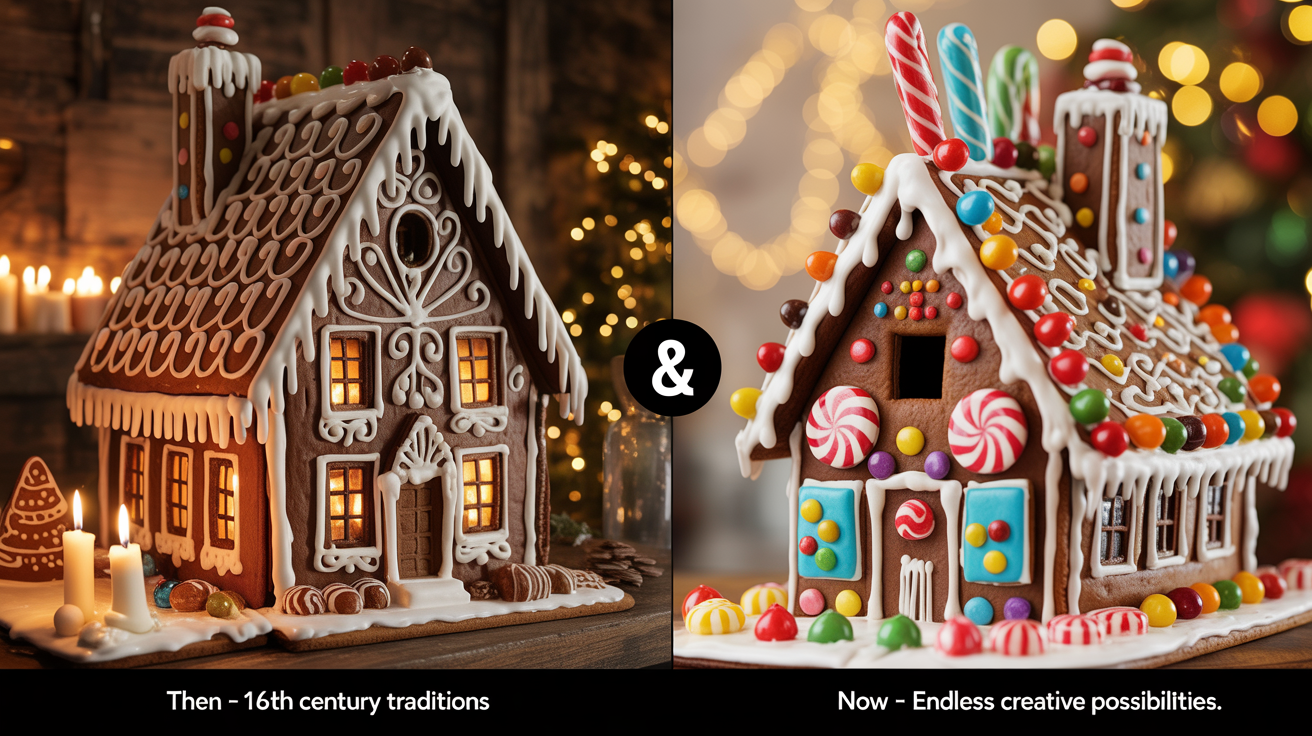
Then: Rustic, cozy, icing-trimmed houses from the 16th century.
Now: Endless possibilities — modern masterpieces bursting with personality.
Today, your gingerbread house can be anything:
- A peaceful winter cottage
- A fairytale-inspired home
- A candy explosion
- A miniature version of your dream house
- Or a timeless, vintage European classic
Gingerbread houses remind us that Christmas is a place where tradition and creativity meet — and where imagination always has a seat at the table.
Final Thoughts
Gingerbread houses continue to charm every generation because they are more than decorative sweets — they are tiny worlds we get to build, share, and remember.
Whether you keep the tradition classic or push it into new realms, your gingerbread house tells a story…
And every story is worth savoring.