What Commercial Soap Ingredients Actually Do — and Where Else You’ll Find Them. Not every synthetic ingredient is evil. Not every natural ingredient is harmless.
The real issue with many commercial soaps isn’t that they contain “chemicals” — everything is a chemical — but that they often contain ingredients designed for industrial efficiency, used frequently, on compromised skin, and without moderation.
Understanding what’s inside these products explains why so many people experience dryness, irritation, flare-ups, and sensitivity — and why homemade soap is often gentler and easier than expected.
Let’s break this down properly.
First: Many “Soaps” Aren’t Actually Soap
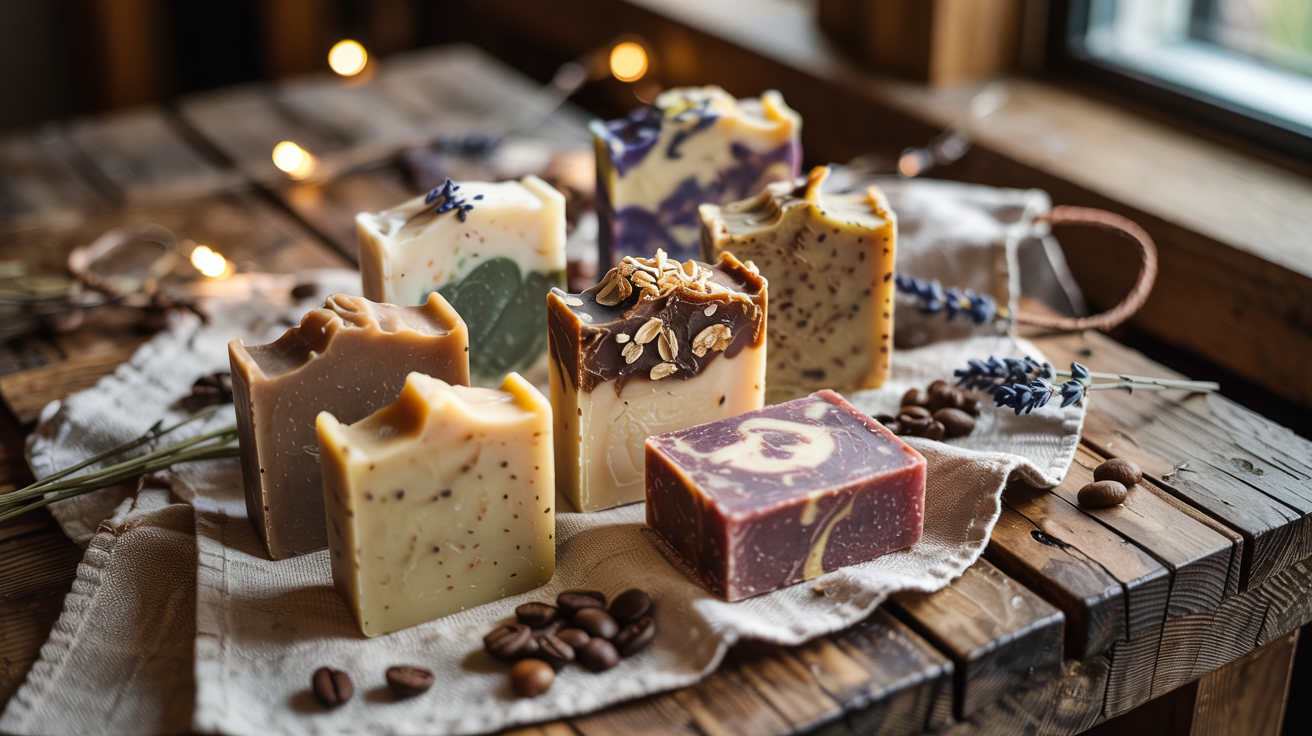
Traditional soap is made by combining fats or oils with an alkali in a process called saponification. This creates true soap and naturally produces glycerin, which helps attract moisture to the skin.
Many products sold today as “soap” are not soap at all. They are synthetic detergent bars and liquid cleansers, often labeled as beauty bars or cleansing bars, designed for:
- Shelf life
- Consistency
- Mass production
- Cost efficiency
They clean well — but often too aggressively.
Why Over-Cleansing Matters
Your skin has a protective barrier made of lipids and beneficial bacteria. When cleansers repeatedly strip this barrier:
- Moisture escapes
- Sensitivity increases
- Skin compensates by overproducing oil
- Irritation becomes chronic rather than occasional
This is where ingredient choice matters.
The Most Common Problematic Ingredients in Commercial Body & Hand Soaps
Below are specific ingredients, what they do, where else they’re used, and why moderation matters.
1. Sodium Lauryl Sulfate (SLS) / Sodium Laureth Sulfate (SLES)
Where else they’re commonly used
- Shampoos and conditioners
- Toothpaste
- Facial cleansers
- Dish soap
- Household and industrial cleaners
- Car wash detergents
Why they’re used
- Extremely effective degreasers
- Create rich foam (which people associate with cleanliness)
- Inexpensive and stable
What they do to the skin
SLS and SLES do not distinguish between dirt and your skin’s natural oils. They remove both. Over time, this:
- Weakens the skin barrier
- Increases water loss
- Makes skin more reactive
Moderation reality
- Occasional use on healthy skin is often tolerated
- Daily use, especially on hands, face, or compromised skin, is where problems arise
2. Synthetic Fragrance (“Fragrance” or “Parfum”)
Where else it’s commonly used
- Laundry detergent
- Fabric softeners
- Candles
- Air fresheners
- Perfumes
- Cosmetics and skincare
Why it’s used
- Masks base ingredient odors
- Creates brand identity
- Encourages emotional attachment
Why it’s problematic
“Fragrance” is a legal umbrella term that can represent dozens or even hundreds of undisclosed chemicals. Companies are not required to list them individually.
Moderation reality
- Fragrance itself isn’t inherently dangerous
- Repeated exposure + unknown composition increases the risk of irritation and sensitization
- Reactions often develop over time, not immediately
3. Triclosan
Where else it’s commonly used
- Antibacterial soaps
- Some toothpaste formulations
- Deodorants
- Kitchen tools and plastics (historically)
Why it’s used
- Kills bacteria
- Marketed as “extra clean”
What it does to the body
- Disrupts the skin’s natural microbiome
- Contributes to antibiotic resistance
- Can interfere with hormone signaling
Moderation reality
- Useful in clinical settings
- Daily household use offers no proven benefit over regular soap
- Overuse may weaken natural defenses
4. Parabens (Methyl-, Ethyl-, Propylparaben)
Where else they’re commonly used
- Lotions and creams
- Makeup
- Hair products
- Pharmaceuticals
- Some food products
Why they’re used
- Highly effective preservatives
- Prevent mold and bacterial growth
- Extend shelf life
What raises concern
Parabens can mimic estrogen in the body. While the effect is weak, cumulative exposure from multiple products is what concerns researchers.
Moderation reality
- One product alone is unlikely to cause harm
- Daily exposure from multiple sources adds up
- Many people choose reduction, not elimination
5. Formaldehyde-Releasing Preservatives
(DMDM Hydantoin, Diazolidinyl Urea, Quaternium-15)
Where else they’re commonly used
- Shampoos
- Liquid soaps
- Body washes
- Nail products
- Industrial disinfectants (formaldehyde itself)
Why they’re used
- Prevent microbial growth
- Extend shelf life in water-based products
- Release small amounts of formaldehyde over time
What formaldehyde does
- Known skin sensitizer
- Can cause allergic reactions
- Classified as a carcinogen at high exposure levels
Moderation reality
- Cosmetic use is regulated
- Risk increases with frequent use, broken skin, or sensitivity
- Hands are especially vulnerable due to micro-cracks
6. Alcohol Denat. (Denatured Alcohol)
Where else it’s commonly used
- Hand sanitizers
- Acne treatments
- Astringents
- Hair styling products
Why it’s used
- Dries quickly
- Kills bacteria
- Improves texture
What it does to skin
- Evaporates rapidly, pulling moisture with it
- Disrupts lipid structure
- Increases sensitivity with repeated use
Moderation reality
- Useful short-term
- Not ideal for daily cleansing
- Overuse leads to dryness and irritation
Important Truth: Natural Does Not Automatically Mean Safe
Some natural ingredients can also irritate:
- Essential oils (especially citrus, cinnamon, clove)
- Botanical extracts
- Overuse of exfoliants
The advantage of homemade soap is control:
- You choose concentration
- You choose frequency
- You adjust based on your skin’s response
That is moderation in practice.
Why Homemade Soap Changes the Equation
Homemade soap:
- Uses fewer ingredients
- Avoids synthetic detergents
- Retains natural glycerin
- Reduces cumulative exposure
- Allows intentional formulation
It’s not about purity.
It’s about balance and awareness.
Commercial soaps are designed to clean quickly and last long on shelves.
Homemade soap is designed to clean gently, intentionally, and with restraint.
When people understand what ingredients do, where they’re used, and how often they encounter them, homemade soap stops being a trend — and starts being a practical, informed choice.