A glass of hibiscus tea can mean something completely different depending on where you grew up.
In Mexico, many people know it as agua de jamaica. In Nigeria, it may be called zobo. Across parts of West Africa, you may hear bissap. In the Caribbean, especially around the holidays, it is often called sorrel. Elsewhere, it is simply sold as hibiscus tea or roselle.
Different names. Different recipes. Different traditions.
But in many cases, they come from the same plant: Hibiscus sabdariffa.
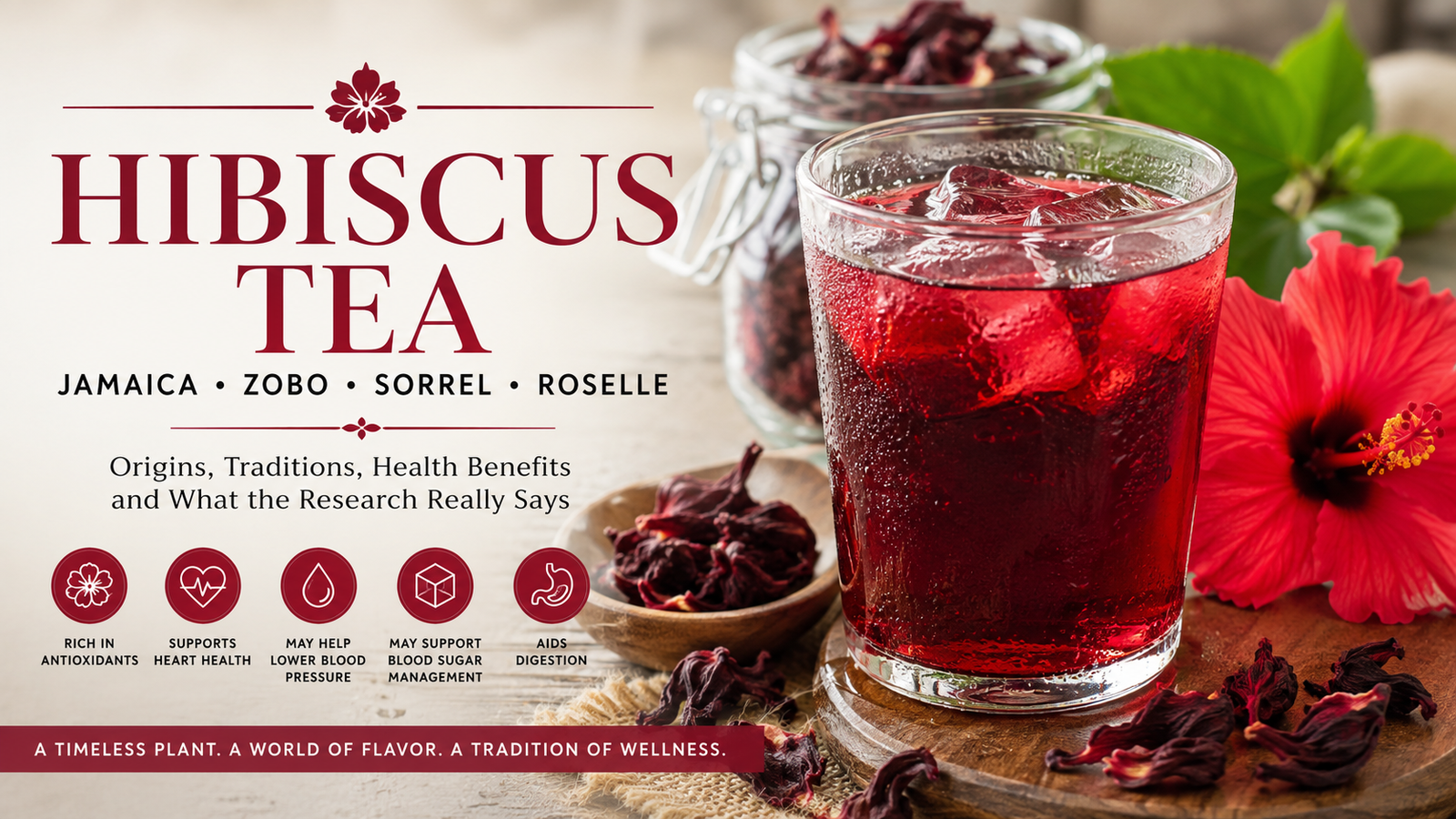
Its deep ruby color and tart, almost cranberry-like flavor have made it part of food traditions across Africa, Latin America, the Caribbean, Asia and the Middle East for generations. Today, hibiscus has also found its way into wellness culture, where it is promoted for everything from blood pressure to blood sugar, fasting and weight management.
Some of those claims have more evidence behind them than others.
What makes hibiscus especially interesting is that it does not need exaggerated promises to be worth knowing. It has a fascinating cultural history, contains several naturally occurring plant compounds, and may offer practical benefits when used as part of an overall healthy routine.
The “Flower” in Hibiscus Tea Is Not Exactly the Flower
When most of us hear “hibiscus tea,” we picture dried flower petals.
The part typically brewed from Hibiscus sabdariffa is actually the fleshy red calyx that surrounds the seed pod after flowering.
Those calyces are harvested and dried until they become the deep burgundy pieces you see sold in bags at markets, tea shops and grocery stores.
When they meet hot water, they release their vivid color almost immediately.
That color comes largely from anthocyanins, a family of plant pigments also responsible for many of the reds, purples and blues found in berries and other fruits and vegetables.
Hibiscus also contains organic acids, flavonoids, phenolic compounds and other naturally occurring phytochemicals that have attracted scientific interest.
A Plant With Many Names and Many Homes
The exact geographic origin of Hibiscus sabdariffa is still debated. Botanical literature variously traces it to Africa, India or Southeast Asia, and the plant has been cultivated and traded across tropical regions for centuries.
What is much clearer is how completely different cultures have made it their own.
In Mexico, agua de jamaica is one of the classic aguas frescas. The dried hibiscus is steeped or simmered, strained, diluted and traditionally sweetened.
In Nigeria, zobo is often prepared with ginger, pineapple, cloves, citrus or other flavorings.
In Senegal and neighboring regions, bissap is deeply embedded in everyday food culture.
Across parts of the Caribbean, sorrel is strongly associated with Christmas celebrations and may be prepared with ginger, cinnamon, cloves, citrus peel or even rum.
The recipes are not interchangeable, and that is part of what makes the plant so interesting.
One ingredient has traveled through the world and become something distinct everywhere it landed.
Hibiscus as Tea Is Different From a Sugary Agua Fresca
This distinction matters if we are talking about wellness.
Unsweetened hibiscus tea is essentially a flavored herbal infusion with very few calories.
Traditional agua de jamaica, on the other hand, can contain a significant amount of added sugar depending on how it is prepared.
Neither version is inherently “wrong.” They simply serve different purposes.
If someone is drinking hibiscus specifically because they are fasting, reducing calories or trying to replace sugary drinks, then adding several spoonfuls of sugar changes the equation.
This is also where personal experience matters.
Many people find unsweetened hibiscus tea satisfying because it has a strong flavor and does not feel like drinking plain water all day. For someone trying to fast longer or avoid snacking, that may be practically useful even if hibiscus itself is not a magic weight-loss treatment.
Why Hibiscus May Feel Helpful During Fasting
This is an area where the conversation gets more interesting.
A small randomized crossover study found that people drinking Hibiscus sabdariffa tea reported less hunger and greater feelings of fullness and satiety than when they drank water. In that study, some effects differed between men and women, and the research was small, so it should not be treated as the final word.
Still, it provides a plausible explanation for something many hibiscus drinkers report in real life: the tea can sometimes make fasting feel easier.
The benefit may not come from one dramatic mechanism.
It may be several small things working together.
You are drinking fluid. The flavor is satisfying. You are replacing a caloric beverage with a nearly calorie-free one. You may feel less interested in eating for a period of time. And because the drink can be served hot or cold, it gives you something more interesting than plain water when you are trying not to snack.
For someone working on weight management, that can matter.
Not because hibiscus melts fat.
Because adherence matters.
If a beverage makes your routine easier to maintain, that is a real-world benefit.
What the Research Says About Weight Loss
This is where I think it is important to hold two ideas at the same time.
Some people genuinely report losing weight while regularly drinking hibiscus tea, particularly when they use it during fasting or as a replacement for sweet drinks.
At the same time, when researchers pooled randomized trials specifically measuring body weight, BMI and waist circumference, hibiscus itself did not produce a meaningful average weight-loss advantage over control groups. :contentReference[oaicite:0]{index=0}
That does not mean hibiscus cannot be useful in a weight-loss routine.
It means we should distinguish between a direct pharmacological weight-loss effect and a behavioral benefit.
If unsweetened hibiscus tea helps someone stay hydrated, feel more satisfied, extend a fasting window or avoid a 250-calorie drink, it can support weight loss indirectly.
That is very different from claiming that the plant causes the pounds to fall off on its own.
Hibiscus and Blood Sugar
There is also research suggesting hibiscus may have modest effects on blood glucose.
A meta-analysis of randomized clinical trials found a small but statistically significant reduction in fasting blood glucose among people consuming Hibiscus sabdariffa preparations. It also found a reduction in LDL cholesterol. :contentReference[oaicite:1]{index=1}
The effect on fasting glucose was not enormous.
So I would never describe hibiscus as a treatment for diabetes or as a replacement for medication.
But it is reasonable to say the plant has been studied for metabolic health and that some findings are encouraging.
Again, preparation matters.
Unsweetened hibiscus tea and a glass of heavily sweetened jamaica may begin with the same plant, but they can have very different effects on someone’s overall sugar intake.
The Blood-Pressure Research Is Stronger
Blood pressure is probably the area where hibiscus has attracted the most consistent clinical attention.
Systematic reviews of randomized trials have found that Hibiscus sabdariffa can reduce systolic and diastolic blood pressure in people with mild-to-moderate hypertension, although it should not be considered a replacement for prescribed antihypertensive medication. :contentReference[oaicite:2]{index=2}
Some clinical trials have also observed increased sodium excretion, which may be one of the ways hibiscus influences blood pressure. :contentReference[oaicite:3]{index=3}
That brings us to another effect many people notice very quickly.
Yes, Hibiscus Can Make You Urinate More
If you have ever started drinking hibiscus tea and thought, “Why am I going to the bathroom so much?” you are not necessarily imagining it.
Hibiscus has a traditional reputation as a diuretic, and experimental research has found diuretic and natriuretic effects — meaning increased urine production and sodium excretion. :contentReference[oaicite:4]{index=4}
That can cause a temporary drop on the scale because your body is carrying less fluid.
It is important to distinguish that from body-fat loss.
Water weight can move quickly.
Fat loss does not work the same way.
Still, for someone who feels bloated or retains fluid, the change can be very noticeable.
What About Digestion?
Hibiscus is also traditionally used in some cultures for digestive purposes, and some traditional medicine sources describe it as having mild laxative properties.
The human evidence for a true laxative effect is much thinner than the evidence for increased urination.
So if someone says hibiscus “makes me go,” it is worth being specific about what they mean.
For many people, that may mean urinating more frequently.
For others, drinking more fluid in general may help bowel regularity.
Individual responses differ.
Why the Color Matters
The spectacular red color of hibiscus is not just beautiful.
It comes partly from anthocyanins, antioxidant plant pigments that researchers study because of their potential effects on oxidative stress and cardiovascular health.
Hibiscus also contains phenolic acids, flavonoids and organic acids. Reviews of the plant describe these compounds as part of the reason Hibiscus sabdariffa has been investigated for cardiovascular, metabolic and anti-inflammatory effects. :contentReference[oaicite:5]{index=5}
That does not transform every pitcher of hibiscus tea into medicine.
It simply means this traditional drink contains biologically active plant compounds — which helps explain why scientists continue studying something people have consumed for centuries.
The Simplest Way to Make Hibiscus Tea
You do not need an elaborate recipe.
Place dried hibiscus calyces in hot water and allow them to steep until the liquid becomes deep red and tart.
Then strain.
You can drink it hot, pour it over ice, or refrigerate a pitcher.
From there, you can add flavors depending on what you enjoy:
- fresh ginger
- cinnamon
- cloves
- lemon or lime
- mint
- orange peel
- pineapple
- sparkling water
If you are drinking it specifically for fasting or weight-management purposes, the key is keeping added sugar low or skipping it altogether.
The natural tartness takes a little getting used to if you grew up drinking sweet agua de jamaica.
But once your palate adjusts, the unsweetened version can be incredibly refreshing.
What I Would Not Do
I would not turn hibiscus into another miracle wellness claim.
It does not need that.
I would not tell someone to stop blood-pressure medication because they drink hibiscus tea.
I would not tell someone with diabetes that hibiscus will control their blood sugar.
And I would not promise that drinking several cups a day will automatically cause weight loss.
Those claims take something genuinely interesting and make it less credible.
What I would say is that hibiscus may fit beautifully into a healthier routine.
For some people, it may help them drink more fluid.
For others, it may make fasting easier.
It may replace sugary beverages.
It may contribute modestly to satiety.
There is legitimate research around blood pressure and some metabolic markers.
And yes, many people notice the diuretic effect very quickly.
Those are meaningful reasons to enjoy it without turning it into something it is not.
A Few Cautions
Because hibiscus may influence blood pressure and blood sugar, anyone taking medication for hypertension or diabetes should be cautious about consuming large amounts or concentrated extracts without discussing it with a healthcare professional.
The same goes for supplements.
A cup of tea is not necessarily equivalent to a concentrated capsule or extract.
Dose matters.
People who are pregnant or breastfeeding should also ask their clinician before using concentrated herbal preparations regularly.
The BeautyGenX Take
I have always found hibiscus interesting because it exists in two worlds at once.
It can be the sweet agua de jamaica served with dinner.
It can be zobo seasoned with ginger and pineapple.
It can be Caribbean sorrel during the holidays.
And it can also be a completely unsweetened herbal tea that someone drinks while fasting because it helps them get through the afternoon without reaching for food.
All of those experiences can exist at the same time.
The research does not support calling hibiscus a proven weight-loss treatment. But a small clinical study has found effects on hunger and satiety, and research supports modest effects on fasting glucose and more consistent effects on blood pressure. Its diuretic properties also have a long traditional history and experimental support. :contentReference[oaicite:6]{index=6}
And real life does not happen inside one laboratory outcome.
If drinking unsweetened hibiscus tea helps someone fast more comfortably, drink fewer calories, stay hydrated and remain consistent with a routine that ultimately helps them lose weight, that experience still matters.
Hibiscus does not have to be a miracle.
It is already a beautiful, deeply traditional plant with an extraordinary global story — and a growing body of science that makes it even more interesting.