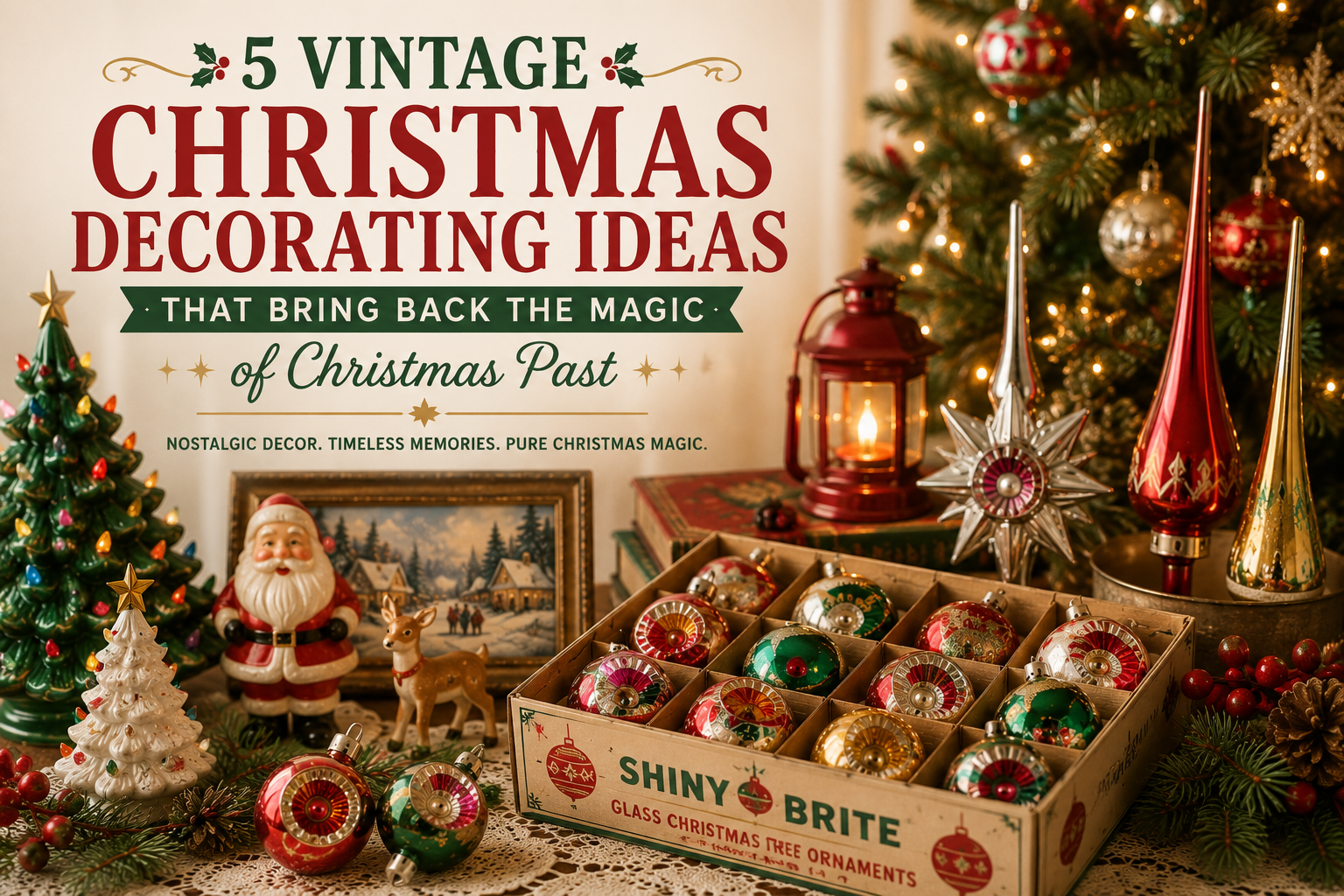
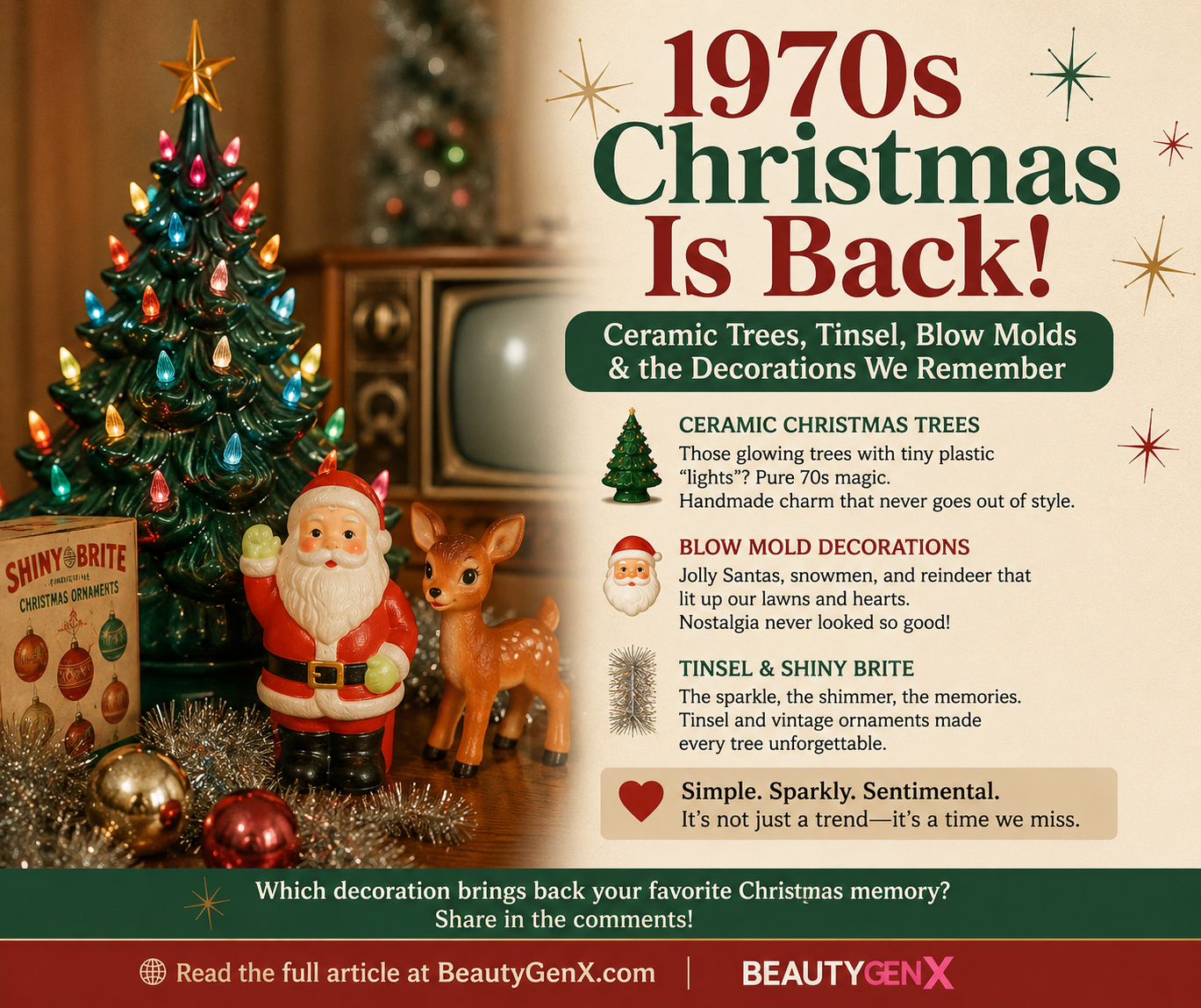
If you grew up in the 1970s, you already know what this article is about before you finish the headline. The ceramic tree with the tiny plastic “lights” glued into drilled holes. The blow mold Santa glowing on the neighbor’s lawn. The specific, glorious excess of tinsel that no modern minimalist tree will ever recapture. These decorations are genuinely back in style — showing up on Pinterest, in vintage shops, and in a lot of nostalgic living rooms this year. Here’s the real story behind them, and how to bring them into a home today.
Ceramic Christmas Trees
The little ceramic tree — usually sitting on a side table, glowing from a single bulb inside its base, with tiny colored plastic “lights” pushed through drilled holes — was a genuine phenomenon of the era, often made in home ceramics classes rather than bought in a store. That’s part of what makes them so nostalgic: many families had one that was actually handmade by a relative or neighbor, not mass-produced. If you’re shopping for a vintage one now, look for the plastic light pegs still intact (they’re often the first thing to go missing or crack) and a base heavy enough to hold the weight of the tree securely.
Blow Mold Decorations
Blow mold lawn decorations — the glowing plastic Santas, snowmen, and nativity figures — first showed up in the early 1960s as plastic manufacturing made mass production affordable, and they were everywhere by the late ’60s and through the ’70s. Companies like Union Products, Empire, Poloron, and General Foam were among the biggest manufacturers. They fell out of favor for a while as inflatable decorations took over the lawn-decor market, but they’ve had a genuine collector’s resurgence in recent years — vintage pieces from this era are now sought after specifically for that slightly imperfect, glowing plastic look that newer decorations don’t replicate.
Tinsel, Unapologetically
The ’70s did not believe in restraint when it came to tinsel, and there’s something genuinely fun about leaning into that rather than fighting it. A tree loaded with icicle tinsel, catching light from every angle, is a specific and joyful look — different from a more restrained vintage approach, and worth doing on its own terms if that’s the era you’re actually going for.
The Color Palette of the Decade
Avocado green, harvest gold, and burnt orange weren’t just kitchen appliance colors — they showed up in Christmas decor too, often alongside the more traditional red and green. A ’70s-inspired tree can genuinely include a few unexpected color notes without looking wrong for the era; it’s actually more accurate that way.
Why It’s Coming Back Now
Nostalgia cycles tend to resurface roughly 40-50 years later, which puts the ’70s squarely in the current wave — and there’s a generational element too: the people who grew up with these decorations are now the ones with the disposable income and the Pinterest boards to bring them back intentionally, while younger shoppers are discovering them fresh as a genuinely different aesthetic from anything currently being mass-produced.
Bringing It Into a Modern Home
You don’t need a full ’70s theme to borrow from this era successfully. One ceramic tree on a console table. A single vintage blow mold by the front door. A loaded tinsel tree in a kid’s playroom while the main living room stays more restrained. Borrowing a few strong, specific pieces from this decade tends to work better than committing an entire room to it.