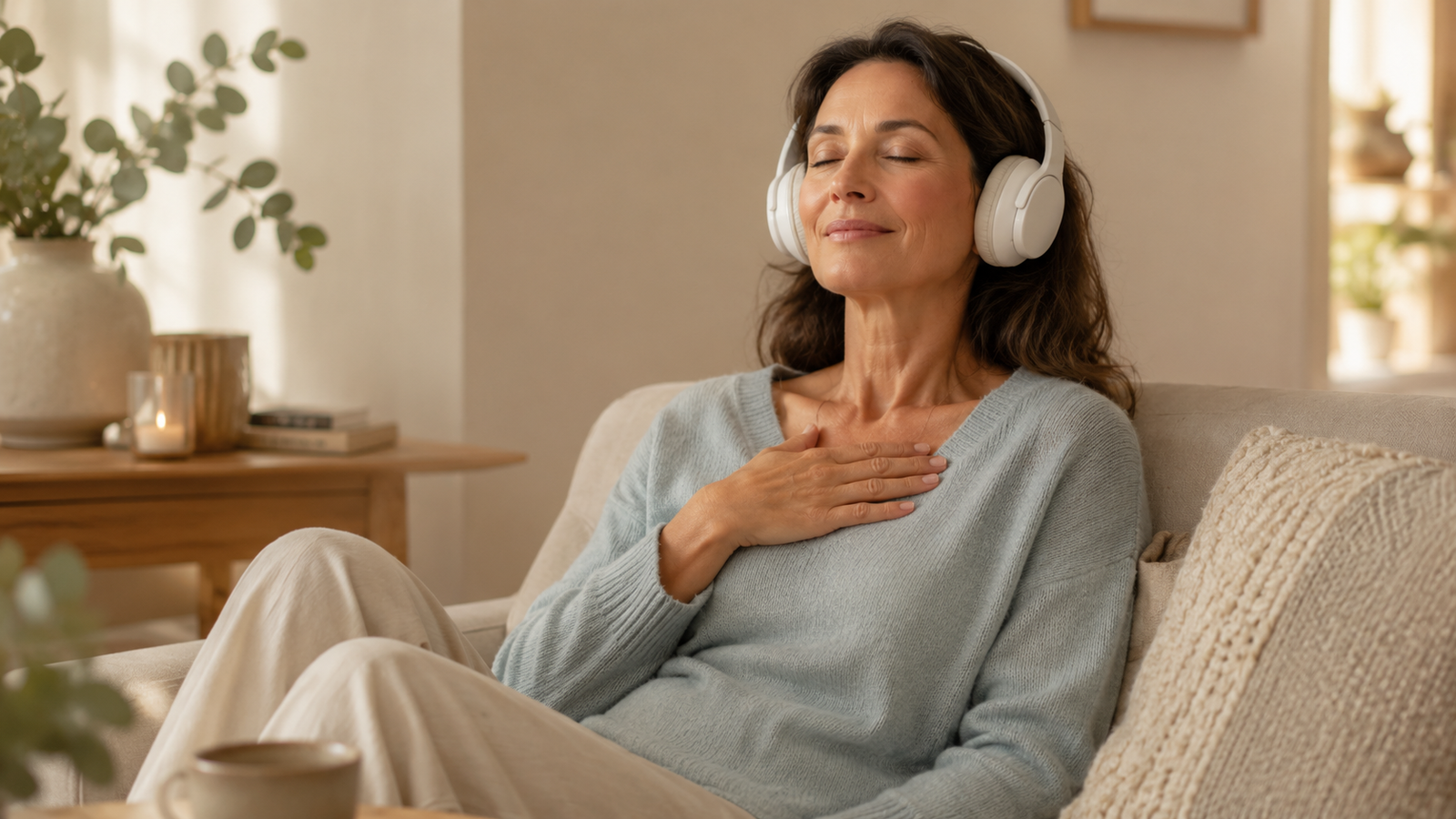
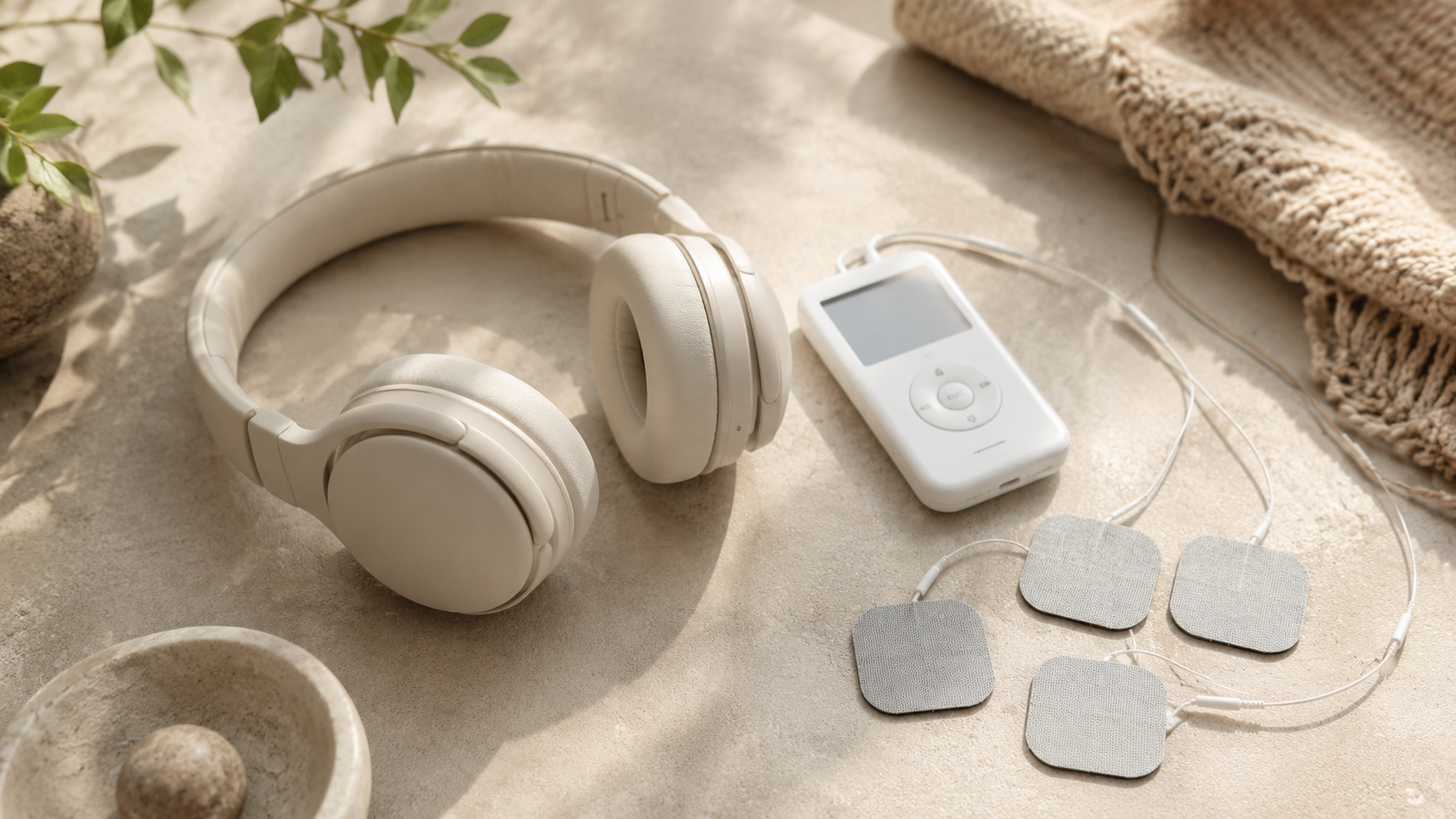
I’ve been skeptical of most “sound healing” trends since I started digging into the research behind them — but binaural beats turned out to be the one thing in this whole category that actually holds up. Not for everything people claim, but for one specific use: calming situational anxiety.
What Binaural Beats Actually Are
This isn’t a mystical claim — it’s a real, measurable auditory phenomenon. When you play two slightly different tones, one in each ear, through headphones, your brain perceives a third “phantom” beat at the frequency of the difference between them. Play 200 Hz in one ear and 210 Hz in the other, and your brain perceives a 10 Hz beat. This only works with stereo headphones — playing the two tones out loud through a single speaker won’t produce the effect.
The Research on Anxiety
This is where the evidence is genuinely strong, not just “promising.”
A 2025 meta-analysis pooling 14 randomized controlled trials and over 1,000 patients found that binaural beats significantly reduced anxiety before surgical procedures — a large effect, and one that also came with reduced post-operative pain and more stable heart rate and blood pressure, outperforming both silence and regular music.
A separate meta-analysis of nine studies on dental anxiety found the same pattern: significant anxiety reduction compared to no intervention. The foundational 2019 meta-analysis — which pooled 22 studies and 35 separate effect measurements — found a solid, consistent, medium-sized effect on anxiety, memory, attention, and pain perception combined. One useful detail from that analysis: binaural beats worked just as well without being layered under white or pink noise, and worked best when people listened before a stressful moment, not only during it.
What This Means for Everyday Use
Most of the strongest studies happened in clinical settings — before surgery, before a dental procedure — where anxiety is acute and situational. That’s genuinely useful information: if you know you have a stressful appointment, a hard conversation, or a nerve-wracking event coming up, putting on headphones and listening to a binaural beat track beforehand has real research behind it as a calming tool.
What the research doesn’t support as strongly is the idea that binaural beats are a reliable daily fix for chronic, ongoing anxiety, or that they’ll sharpen your focus and memory — the research on cognition and memory specifically is much more mixed and inconsistent, with some studies finding no effect at all. I’ll cover that separately, because it deserves its own honest look rather than getting lumped in with the anxiety findings, which are the strongest part of this research.
How to Actually Try It
- You need stereo headphones or earbuds — this doesn’t work through a speaker.
- Start the track 10–15 minutes before the stressful moment, not just during it.
- Theta and delta frequency ranges (roughly 4–8 Hz and below) are the ones most studied for anxiety and relaxation.
- Keep expectations realistic: this is a short-term calming tool for a specific moment, not a treatment for a diagnosed anxiety disorder.
My Honest Take
Of everything in the “healing frequency” world, this is the one I’d actually recommend trying, because the research backing it up is real and replicated across multiple independent teams. It won’t replace therapy or medication if you need those, but as a free, low-risk tool for getting through a specifically stressful moment, it’s earned its place.
Curious where the weaker frequency claims fall apart? I broke down the evidence (or lack of it) behind 432 Hz music and the 528 Hz and 741 Hz “healing frequency” claims — worth reading if you want the full picture of what’s real and what’s marketing.
This article is for general education and isn’t a substitute for medical advice. If anxiety is significantly affecting your daily life, please talk with your doctor or a mental health professional.