A Shared Legacy Across Civilizations
No single people “invented” tamales. They arose across Mesoamerica—among the Olmec, Maya, Mexica/Aztec, Toltec, Pipil, and other communities—each adapting the same core idea (corn dough + filling + leaf wrap + steam) to local landscapes, rituals, and trade. The result is one of the oldest continuously prepared foods in the Americas.
🔥 Earliest Evidence (very early Mesoamerica)
- Pictorial and archaeological clues place tamal-like foods as far back as ~8000–5000 BCE in what is now Guatemala and southern Mexico.
- Early doughs could be made from teosinte (the wild ancestor of maize), with techniques evolving as nixtamalization (alkali treatment of corn) spread and transformed flavor and nutrition.
- Early cooking methods included earth ovens/steam pits; wrappers were broad leaves (and later, corn husks). Fillings ranged from wild game and fish to beans, squash, herbs, and flowers.
🛡️ Why Tamales Took Hold
- Portable provisions: Hunters, travelers, porters, and armies needed compact, durable, calorie-dense food—tamales were the original field ration.
- Sacred corn: Across cultures, corn was divine. Tamales appear in ritual and seasonal calendars; origin tales credit the gods with gifting tamales (some Nahua accounts name star deities such as the Tzitzimime).
- Ceremony & hospitality: Tamales mark festivals, rites of passage, weddings, funerals—and the act of making them (the tamalada) is communal and ceremonial in itself.
🧭 How Tamales Spread & Differed
Tamales moved along trade, tribute, and pilgrim routes and were adapted to climate and crops:
- Mexica/Aztec regions: Widespread use of corn husks; fillings included turkey, fish, beans, and more—often linked to specific deities and festivals.
- Maya areas: Frequent use of banana/plantain leaves; steaming in pib (earth ovens); fillings like deer, rabbit, squash.
- Pipil (El Salvador): Abundant tropical leaves led to a very moist, leaf-wrapped tamal style that persists. Over time, colonial-era ingredients (e.g., olives, capers, chickpeas, potatoes) entered festive fillings, shaping today’s Salvadoran profile.
Across Mesoamerica the template stayed constant—corn masa + filling + leaf wrap—but the wrapper, texture, and seasoning expressed each region’s ecology and history.
🧂 What Makes Salvadoran Tamales Distinct
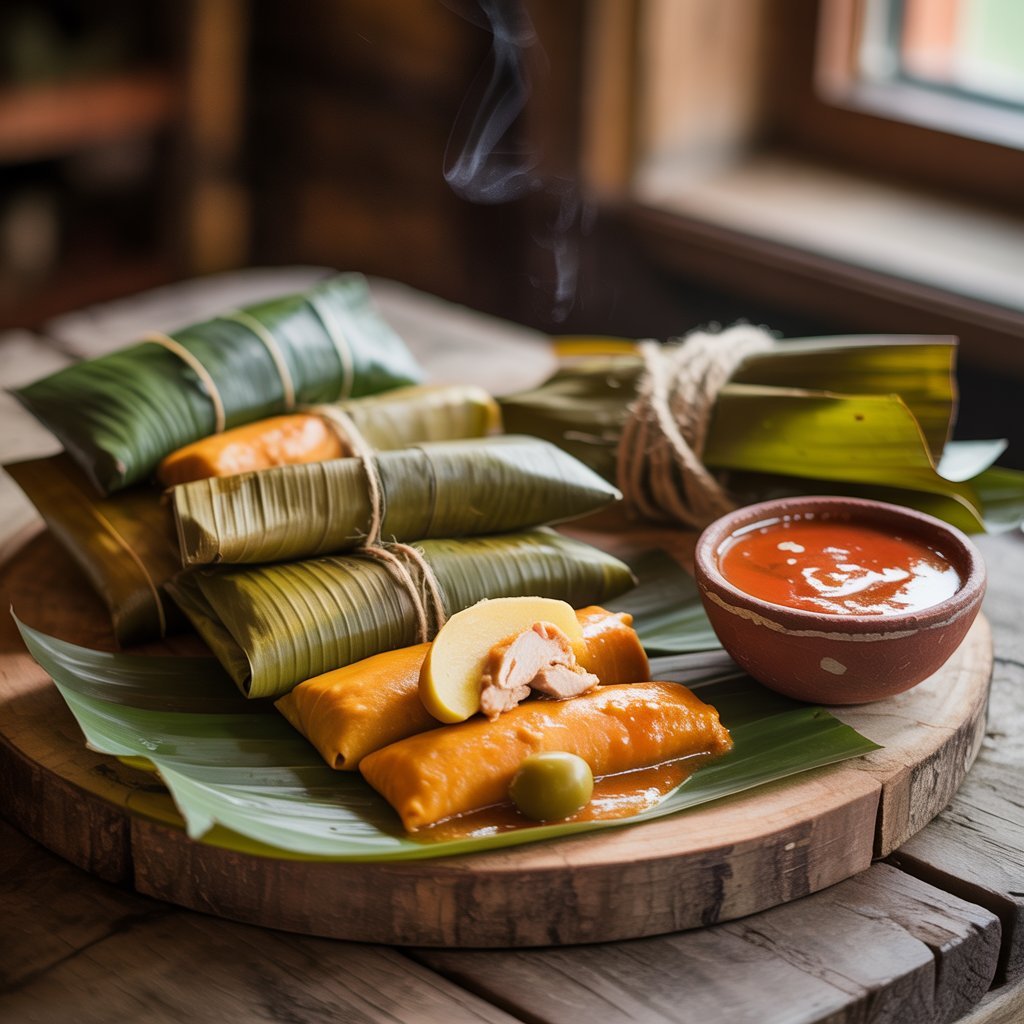
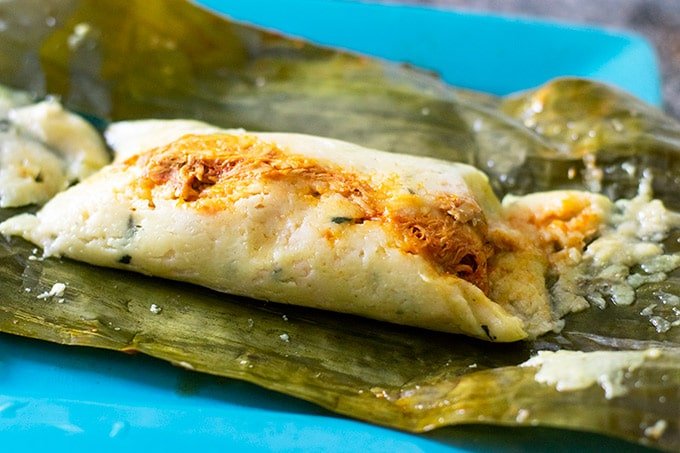
- Banana/plantain leaf wrapping: Leaves are softened and used as the wrapper, yielding supple, aromatic, and extra-moist masa (a texture corn husks can’t match).
- Soft, custardy masa atole: Masa is cooked with broth and fat (or oil)—sometimes with a little rice blended in—creating a silky, spoonable dough.
- Tomato–achiote recado + relajo: A mild tomato-achiote sauce (recado) and a relajo spice mix (often toasted sesame and pumpkin seeds, oregano, black pepper, etc.) lend color and aroma rather than heat.
- Classic “garnish set” inside: A slice of potato and a green olive (often with capers, chickpeas, carrot, or green bean) are tucked into each tamal, a beloved Salvadoran hallmark.
- Festive timing: Today, Salvadoran families make large batches for Christmas, New Year’s, patronal feasts—and, in the U.S., often for Thanksgiving, where banana-leaf tamales sit proudly beside the turkey.
Tamales are a shared Mesoamerican invention—refined for millennia—while Salvadoran tamales, with their leaf wrap, silky masa, and potato-olive heart, tell a distinctly Salvadoran story of place, history, and celebration.
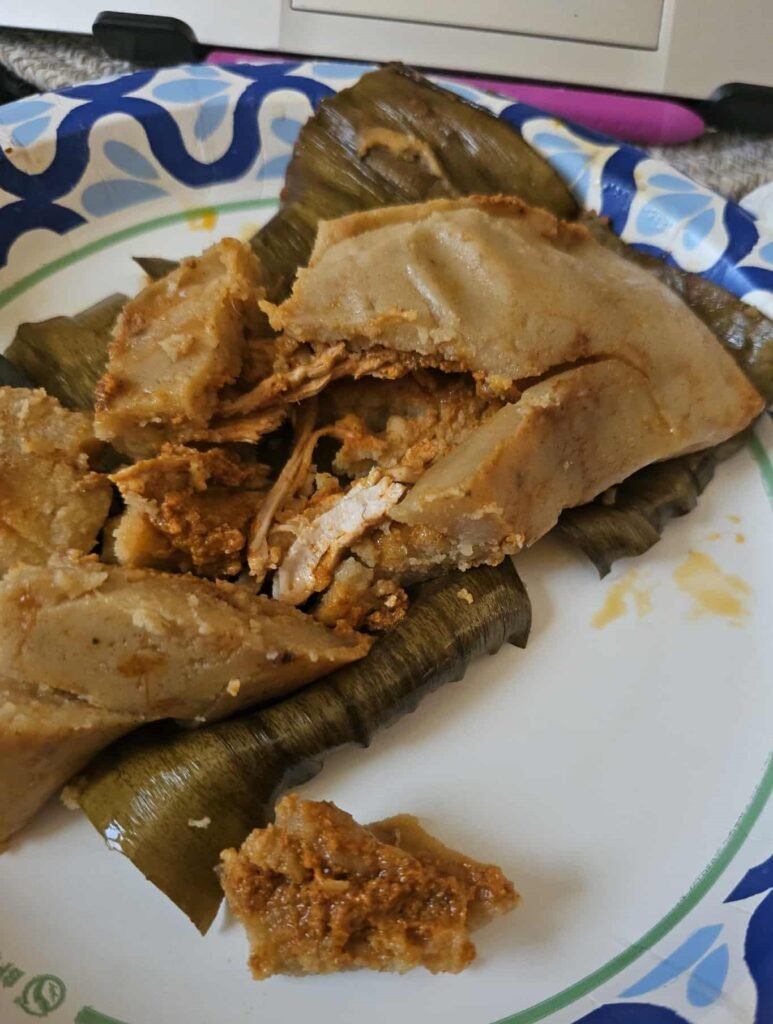
Salvadoran Tamales (Tamales Salvadoreños)
Yield: ~24 tamales (about 10–12 servings)
Total time: 3–4 hrs (most is simmering/steaming)
Level: Intermediate (just follow the order and you’ll be fine)
What makes them Salvadoran?
- Banana/plantain leaves as the wrapper (for aroma & super-moist texture)
- Cooked masa (atole)—silky, almost custardy
- Mild recado (tomato + achiote + seed spices/“relajo”)
- Inside each tamal: a slice of potato and a green olive, often plus chickpeas, capers, carrot, green bean
Ingredient List (by part)
A) Wrappers
- 2–2½ lb banana or plantain leaves (1–2 frozen packages), thawed
- Kitchen twine or 24 narrow leaf strips (or foil for outer wrap)
Cut leaves into ~24 rectangles (about 10×12 in / 25×30 cm) + a few extras. You can lay a small square of parchment on each leaf if you like extra insurance against sticking.
B) Broth & Chicken (or Turkey)
- 3–3½ lb bone-in chicken (thighs/legs) or leftover cooked turkey
- ½ onion (chunked), 4 garlic cloves (smashed), 2 bay leaves
- 1½ tsp fine salt + ½ tsp black pepper
- Water to cover by ~1 in (2–3 cm)
You’ll shred the meat and save the broth for the masa and recado.
C) Recado (Tomato–Achiote sauce)
- 6 Roma tomatoes, halved
- 1 red bell pepper, seeded & chunked
- ½ medium onion, chunked
- 4 garlic cloves
- 2 Tbsp achiote paste (or 2–3 tsp ground annatto)
- 2 Tbsp sesame seeds
- 2 Tbsp pepitoria (ground pumpkin seeds)
- 1 tsp dried oregano
- ½ tsp cumin
- 6 black peppercorns (or ½ tsp ground)
- 1 small guajillo chile, seeded (optional—color, not heat)
- 1 slice stale bread or 1 Tbsp masa harina (thickener)
- 1–1½ cups reserved broth, as needed
- 2 Tbsp oil or lard, salt to taste
D) Masa (cooked “atole” style)
- 8 cups masa harina for tamales or 2 lb fresh ground masa
- ½–1 cup rice flour or ½ cup uncooked rice blended with broth (optional but traditional in many families)
- 8 cups hot broth (from Part B), plus more as needed
- 1 cup neutral oil or lard
- 1½–2 tsp fine salt
- ¼ cup recado (from Part C) for color/flavor
Texture target: thick but spoonable—like soft polenta. It should mound, not run.
E) “Garnish set” & Filling
- Shredded chicken/turkey (from Part B; moisten with a little recado)
- 2 large potatoes, boiled until just tender, sliced into 24 half-moons
- 1 cup cooked chickpeas (garbanzos), drained
- ½ cup green olives (pitted; stuffed is fine)
- 2–3 Tbsp capers, rinsed
- 1 large carrot, coins or matchsticks, blanched
- ½ lb green beans, 1–2 in pieces, blanched
- Extra recado for spooning during assembly
You won’t use every veg in every tamal—aim for 1 potato slice + 1 olive + a small mix (chickpeas/capers/veg) per tamal.
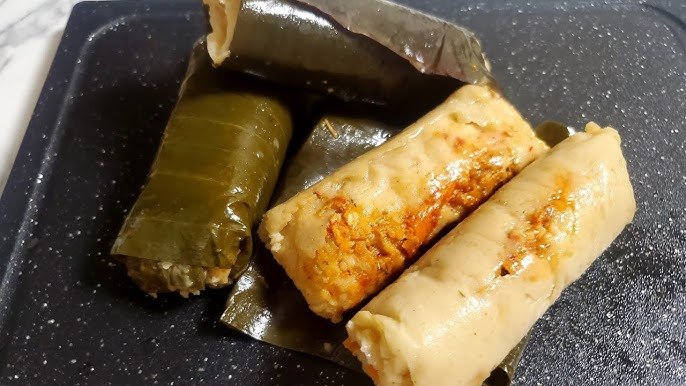
Step-by-Step
1) Poach & shred the chicken; save the broth
- Add chicken, onion, garlic, bay, salt/pepper to a pot; cover with water by ~1 in.
- Simmer gently 35–45 min until tender. Cool in the liquid.
- Strain and reserve the broth (you need a lot). Shred the meat; toss with a few spoons of recado so it stays juicy.
2) Make the recado
- Dry-toast sesame seeds & pepitoria in a skillet until fragrant; set aside.
- In the same pan, add 1 Tbsp oil; soften tomatoes, bell pepper, onion, garlic (6–8 min).
- Blend veggies with toasted seeds, achiote, oregano, cumin, peppercorns, guajillo (optional), bread (or masa) and enough hot broth to make a pourable sauce.
- Return to pan with 1 Tbsp oil; simmer 8–10 min to thicken. Salt to taste. You want a smooth, spoon-coating, mild sauce.
3) Cook the masa (atole)
- In a wide pot, whisk masa harina (and rice flour, if using) with hot broth until lump-free.
- Stir in oil/lard, salt, and ¼ cup recado for color.
- Cook over medium, stirring constantly (wooden spoon or whisk), 10–15 min until glossy and thick like soft polenta.
- Off heat; keep warm (it spreads easier warm). If it stiffens, whisk in a splash of hot broth.
4) Prepare the banana leaves
- Pass each piece quickly over a low flame or hot dry skillet to wilt and make pliable (or steam 1–2 min).
- Wipe clean; trim tough center ribs. Keep covered to prevent cracking.
5) Assemble
For each tamal (work on a leaf rectangle):
- Spoon ¼–⅓ cup warm masa in the center; spread to ~4×5 in oval.
- Top with 1–2 tsp recado and 1–2 Tbsp shredded chicken/turkey.
- Add 1 potato slice + 1 olive, then 3–4 chickpeas, a few capers, and a little carrot/green bean.
- Fold the long sides of the leaf over to enclose, then fold ends under to make a snug packet. Tie with leaf strip/twine or wrap in foil.
6) Steam
- Line the bottom of a large steamer with extra leaf scraps; add water below the rack.
- Arrange tamales seam-side down. Cover with a layer of leaves and the lid.
- Steam 60–75 minutes, checking water. Tamales are done when the masa is set and pulls cleanly from the leaf.
- Rest 15 minutes before serving (they firm up beautifully).
Serve
- Tear open the leaf, spoon a little warm recado on top.
- Great with curtido (light Salvadoran slaw) or a squeeze of lime.
Make-ahead: Refrigerate up to 4 days or freeze up to 3 months. Reheat by steaming (15–25 min), not microwaving if you can help it.
Variations (authentic but flexible)
- Thanksgiving twist: Use turkey broth & meat; add a few cubes of roasted squash in place of carrot.
- Vegetarian: Swap in mushrooms & hearts of palm; keep the potato-olive-chickpea set. Use vegetable broth.
- Spicier (non-traditional): Add a second guajillo or a pinch of cayenne to the recado—Salvadoran profiles are mild by default.
Shopping list:
“Take-to-the-Store” shopping list with quantities to make ~24 Salvadoran tamales, plus a tools/equipment checklist so you’re fully set up.
Shopping List (with quantities)
Wrappers
- Banana/plantain leaves: 2–2½ lb (usually 2 frozen packs)
- Kitchen twine (small roll) or use extra leaf strips/foil to tie
Meat & Broth
- Chicken, bone-in (thighs/legs): 3–3½ lb
or use leftover cooked turkey plus turkey/chicken broth - Onion: 1 medium (½ for broth, ½ for recado)
- Garlic: 8 cloves (4 for broth, 4 for recado)
- Bay leaves: 2
- Black pepper: ½ tsp (or 6 peppercorns)
- Kosher salt: have ~2–3 Tbsp on hand (for broth, masa, sauce)
You’ll end up with 10–12 cups total broth (you’ll use 8 cups for masa and 1–1½ cups for recado, plus a little extra to adjust).
Recado (tomato–achiote sauce)
- Roma tomatoes: 6
- Red bell pepper: 1
- Onion: (already above—use the remaining ½)
- Garlic: (already above—use 4 cloves)
- Achiote (annatto) paste: 2 Tbsp (or 2–3 tsp ground annatto)
- Sesame seeds: 2 Tbsp
- Pepitoria (ground pumpkin seeds): 2 Tbsp
- Dried oregano: 1 tsp
- Ground cumin: ½ tsp
- Guajillo chile (optional, for color not heat): 1 small
- Stale bread: 1 slice or 1 Tbsp masa harina (thickener)
- Neutral oil or lard: 2 Tbsp for the sauce (plus more for masa below)
Masa (cooked “atole” style)
- Masa harina for tamales: 8 cups (about 1 kg / 2.2 lb)
or 2 lb fresh ground masa - Rice flour: ½–1 cup (optional but common)
or ½ cup uncooked rice (blend with broth) - Hot broth: 8 cups (from your pot)
- Neutral oil or lard: 1 cup
- Salt: 1½–2 tsp
- Recado: ¼ cup (from the batch above) to tint/flavor the masa
Filling “Garnish Set”
- Boiled potatoes: 2 large, sliced into ~24 half-moons
- Green olives (pitted): ½ cup (about 24 olives)
- Chickpeas: 1 cup cooked or 1 (15-oz) can, rinsed/drained
- Capers: 2–3 Tbsp, rinsed
- Carrot: 1 large, sliced & blanched
- Green beans: ½ lb, cut 1–2 in & blanched
You won’t stuff every vegetable into every tamal—plan on 1 potato slice + 1 olive + a small pinch of chickpeas/capers/veg per tamal.
Tools & Equipment
Steam & cook
- Large steamer (tamale steamer) or deep stockpot with a rack/steamer insert
- Wide heavy pot for cooking the masa (nonstick or enameled if you have it)
- 12-inch skillet (to toast seeds / sauté recado)
- Blender (counter or high-speed) for the recado
Assembly
- Tongs (to handle hot leaves)
- Large mixing bowls (masa, filling, recado)
- Wooden spoon / silicone spatula (stirring masa)
- Ladle & measuring cups/spoons
- Cutting board & sharp knife
- Kitchen twine or extra leaf strips; aluminum foil or parchment squares (optional liners)
- Clean towels & sheet trays for staging wrapped tamales
Nice to have
- Digital scale (for masa), heat-proof gloves, timer
Notes for success
- Banana leaves: Quickly pass over a flame or hot dry skillet to wilt/soften (or steam 1–2 min), then wipe clean and trim ribs.
- Masa texture: Aim for thick, glossy, spoonable (like soft polenta). If it tightens as it cools, whisk in hot broth a splash at a time.
- Steam time: 60–75 minutes; done when masa pulls cleanly from the leaf. Rest 15 min before serving for perfect slices.