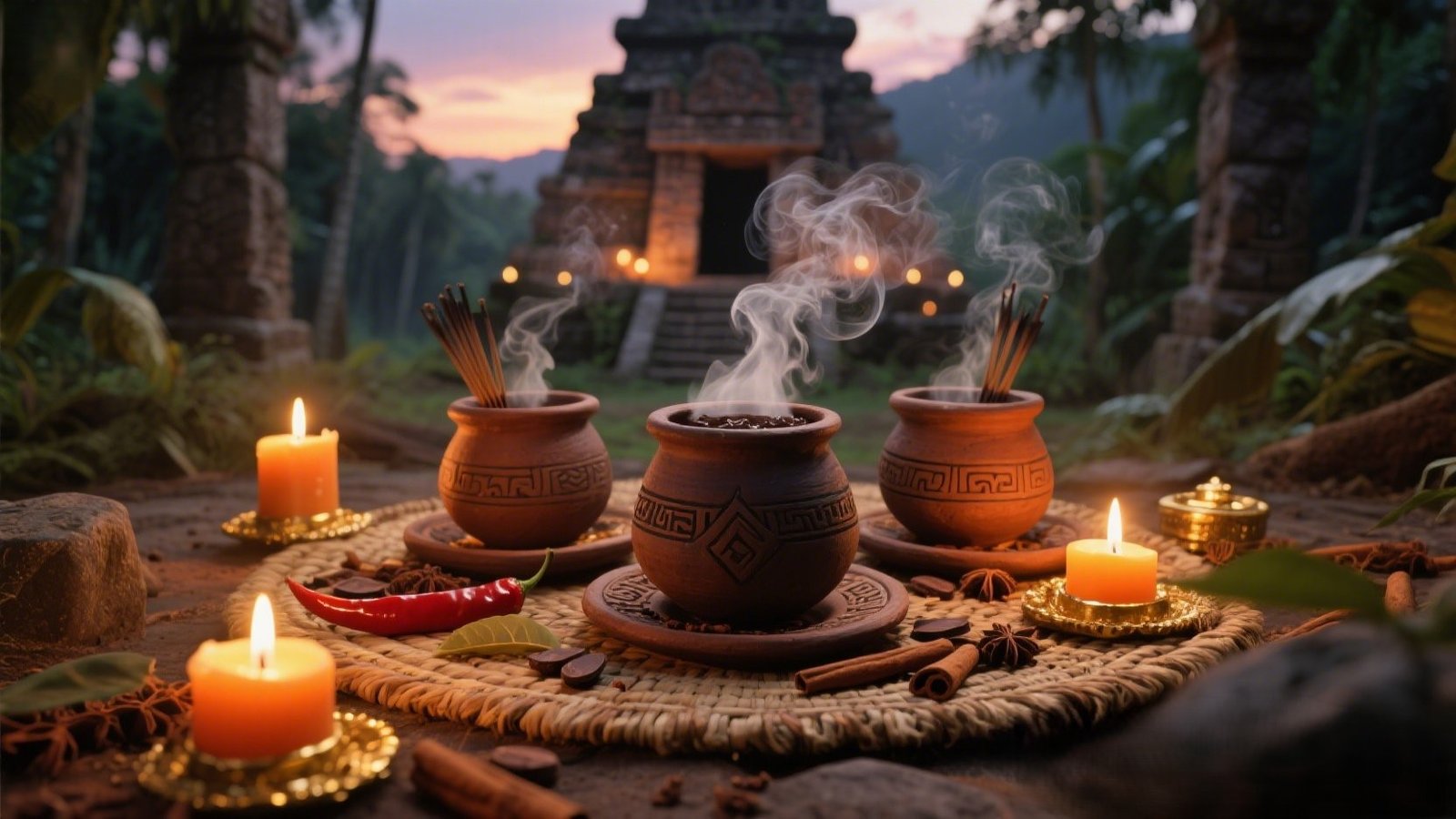
Long before Starbucks or sweetened cocoa mixes, the Aztecs and Maya sipped a sacred drink called Xocoatl—the “bitter water of the gods.” Made from pure cacao, water, chili, and spices, it was far more than a beverage. It was a ritual, a source of strength, and a symbol of connection to the divine.
Consumed during ceremonies, battles, or quiet moments of reflection, this drink was carefully prepared to create a frothy, aromatic cup—a practice considered both art and prayer. Some versions included cornmeal for body, cayenne or ancho chili for warmth, and honey or nectar for just a hint of sweetness.
Today, traditional versions are still made in parts of Mexico and Central America, often during cultural festivals or by families keeping ancient culinary traditions alive. When you sip it, you’re tasting history—a flavor unchanged for hundreds of years, connecting you to the rituals, the people, and the sacred heart of Mesoamerica.
Whether you crave the fiery spice, the rich bitterness, or the sense of walking in the footsteps of the ancients, Xocoatl invites you to slow down, savor, and feel history in every sip.
Over centuries, Mesoamerican civilizations experimented and perfected their cacao drinks. Each version carried its own ritual significance, flavor profile, and cultural meaning. Here are four authentic ancient recipes, complete with historical notes and traditional variations, so you can experience the sacred beverage exactly as it was enjoyed centuries ago.
1️⃣ Classic Maya / Aztec Xocoatl
Ingredients:
- 2 cups water
- 2 oz cacao paste (or 100% cacao chocolate)
- ½ tsp ground cinnamon
- ¼ tsp ancho chili powder
- Pinch of cayenne (optional)
- ½ tsp vanilla extract
- 1–2 tsp honey or agave (optional)
Method:
- Boil water and simmer cinnamon and chili for a few minutes.
- Reduce heat and whisk in cacao paste until smooth.
- Stir in vanilla and sweetener if desired.
- Froth by whisking or pouring between cups for airy foam.
- Serve warm.
Historical Notes & Variations:
- Froth was sacred; Aztecs valued it as much as flavor.
- Variations included annatto, allspice, or cacao flowers.
- Cornmeal occasionally added for body.
- Consumed in daily life, ceremonial rituals, and even before battles.
- Modern adaptations sometimes include honey or other sweeteners, though original versions were typically bitter.
2️⃣ Mayan Ceremonial Cacao Drink
Ingredients:
- 2 cups water
- 2 oz ceremonial-grade cacao
- 1 tsp cornmeal or masa
- Cayenne pepper to taste
- Optional honey or agave
Method:
- Dissolve cacao and cornmeal in water over gentle heat.
- Stir in cayenne and sweetener if desired.
- Froth or stir vigorously, serve warm.
Historical Notes & Variations:
- Used in sacred ceremonies to honor the gods.
- Cornmeal added texture and body; spices offered warmth and spiritual grounding.
- Flower essences and aromatic spices were occasionally added.
- Modern ceremonial cacao sometimes preserves these ingredients, with optional vanilla or natural sweeteners.
- Considered medicinal and ritualistic, strengthening body and spirit.
3️⃣ Ancient Champurrado-Style Cacao
Ingredients:
- 50 g masa / corn dough
- 2 oz roasted cacao beans or paste
- 1 chili pepper
- 1–2 cups water
- Optional sweetener
Method:
- Grind cacao, corn, and chili into a paste.
- Add water gradually and heat gently, whisking to combine.
- Froth and serve.
Historical Notes & Variations:
- Thicker and richer than Xocoatl, bridging ancient flavors with modern “champurrado” style.
- Sweeteners optional: honey or sugar.
- Additional spices like cinnamon, allspice, or vanilla could be added.
- Served in ritual, festive, and daily contexts.
4️⃣ Pre-Columbian Pozol with Cacao
Ingredients:
- Fermented corn dough / masa
- Cacao paste or ground beans
- Water
Method:
- Mix corn dough and cacao with water.
- Let fermentation influence flavor if recreating historically.
- Serve warm or cold.
Historical Notes & Variations:
- Pozol was a staple beverage; blending cacao created a ceremonial or daily drink.
- Fermentation added depth and complexity.
- Some recipes included chili or other local spices.
- Still consumed today in regions preserving centuries-old culinary traditions.
🔍 A Few More Historical Notes
- The oldest chocolate drink vessels date back very far, and archaeological tests show some ancient drinks may have been fermented cacao pulp, not just bean-based chocolate. (Chemistry World)
- The Maya called their cacao drink “kakaw,” and some specific names included om kakaw (“foamy” cacao) for foamy versions. (University of Oregon Blogs)
- Additives varied widely: not just chili, but also earflower, annatto (achiote), allspice, and more. (University of Oregon Blogs)
- Froth was very important: pouring from height between vessels or agitating was how they made the drink desirable, not just for show. (Amonbê)
- According to the Sacred Cookbook, a traditional Mayan cacao drink had just a little chili and sometimes honey, focusing on the raw, pure cacao flavor.
Whichever version you choose, you’re not just making a drink—you are tasting centuries of history, ritual, and devotion. Let each sip connect you to the sacred heart of Mesoamerica, bringing warmth, strength, and reverence into your day.