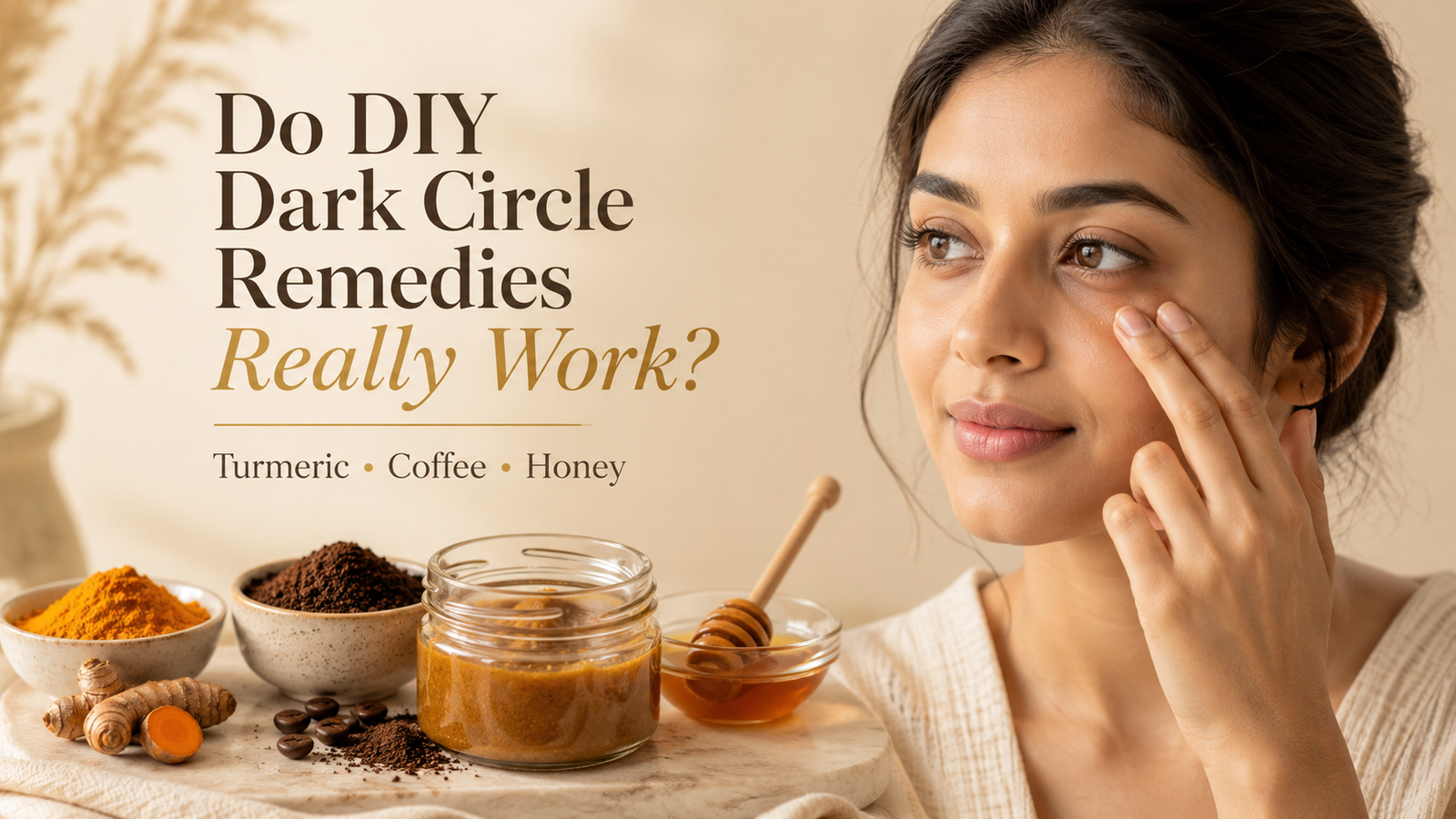
Dark circles are one of those beauty concerns that invite endless home remedies.
Turmeric. Coffee. Honey. Cold spoons. Tea bags. Cucumber slices. Somewhere online, someone is always promising that one kitchen ingredient can erase tired-looking eyes in a few minutes.
The appeal is obvious. These remedies are inexpensive, easy to try, and often made with ingredients already sitting in the pantry.
The problem is that “dark circles” are not one single condition.
They can come from pigmentation, visible blood vessels, allergies, swelling, genetics, thin skin, sun exposure, loss of volume under the eyes, or shadows created by facial structure. In many people, several of those factors are happening at the same time. That is why one remedy may make someone look temporarily brighter while doing almost nothing for another person.
So what about the popular turmeric, coffee and honey mixture?
There is some interesting science behind parts of the idea. But that is very different from saying a homemade mask can “remove dark circles.”
Why Dark Circles Are More Complicated Than They Look
Before deciding what might help, it is useful to understand what you are actually seeing.
Some under-eye darkness is caused by extra pigment in the skin. Some comes from blood vessels showing through thin skin. Puffiness can create shadows. As we age, changes in the tear trough and loss of volume can create hollows that look darker even when the skin itself has not become more pigmented.
Allergies, dermatitis and rubbing the eyes can also contribute to discoloration. Sun exposure may make pigmentation more noticeable.
This is why the most useful question is not simply, “What removes dark circles?”
It is:
What is causing mine?
A remedy aimed at pigmentation will not correct a structural shadow. Something that temporarily reduces puffiness will not necessarily change inherited pigmentation.
That distinction matters.
Coffee: The Most Interesting Ingredient of the Three
Of the three ingredients in the viral DIY mixture, caffeine has the strongest direct connection to under-eye products.
Topical caffeine has been studied for periorbital pigmentation and puffiness, and reviews of eye-cream ingredients describe evidence that caffeine may help improve the appearance of certain types of under-eye darkness, particularly when vascular factors are involved. One small study using a 3% caffeine pad reported improvements in pigmentation, circulation and skin appearance after a month of use.
That does not mean rubbing coffee grounds under your eyes produces the same result.
A formulated skincare product controls the caffeine concentration, texture, stability and other ingredients touching the skin. Coffee grounds are physically rough, and the under-eye area is one of the thinnest and most delicate areas of facial skin.
So while caffeine itself is interesting, aggressively scrubbing coffee grounds around the eyes is not something I would recommend.
The useful part of the viral idea may be the ingredient.
The homemade delivery method is another question entirely.
Turmeric: Promising, but Not a Proven Dark-Circle Eraser
Turmeric contains curcumin and has been studied for anti-inflammatory and pigment-related effects.
A systematic review of natural ingredients for hyperpigmentation found limited clinical evidence suggesting topical turmeric extracts may help improve some facial hyperpigmentation. Another review of nature-derived approaches to periorbital pigmentation includes curcumin among ingredients that have been investigated.
But there is an important difference between a standardized turmeric extract in a cosmetic formulation and mixing kitchen turmeric into a homemade mask.
Turmeric can also temporarily stain skin yellow, which is not exactly the brightening result most people are hoping for before leaving the house.
If someone wants to explore turmeric for skincare, a professionally formulated product designed for facial use is easier to evaluate than a recipe made from spice powder.
What About Honey?
Honey is often included in DIY skincare because it feels soothing and moisturizing.
That may make a homemade mixture feel pleasant, particularly on dry skin. But hydration and comfort are not the same as treating the underlying cause of dark circles.
If the darkness comes from pigmentation, visible vessels, hollowness or facial structure, honey is unlikely to address the main issue.
That does not make honey “bad.”
It simply means we should stop asking every skincare ingredient to perform a job it was never proven to do.
Why the DIY Mask Can Still Make Someone Think It Worked
This is where beauty before-and-after videos can become misleading even when nobody is intentionally trying to deceive anyone.
Imagine applying a cool, moist mixture underneath tired eyes.
The skin becomes hydrated. You rinse your face. The area looks fresher. Lighting changes. Puffiness may temporarily settle.
You look in the mirror and think:
It worked.
Maybe something did improve.
But temporary brightness is not necessarily the same as reducing pigmentation.
This distinction is important because cosmetic improvements can be real without being permanent or treating the underlying cause.
If You Want to Try a DIY Version, Be Gentle
The skin around the eyes deserves more caution than the skin on your arms or legs.
Avoid getting homemade mixtures into the eyes themselves, and do not scrub the area with coarse coffee grounds. Any new topical ingredient can potentially cause irritation or allergic contact dermatitis, and irritation around the eyes can actually worsen discoloration in some people.
If you insist on experimenting with a homemade mixture, keep the application gentle, avoid the lash line and broken or irritated skin, and stop immediately if you notice burning, itching, swelling or persistent redness.
“Natural” does not mean irritation-proof.
What Has Better Evidence?
If the goal is improving the appearance of under-eye darkness rather than simply trying a viral recipe, the evidence becomes more interesting.
Researchers have studied ingredients including caffeine, vitamin C, retinoids, niacinamide, azelaic acid and other topical agents, although the appropriate choice depends heavily on what is creating the darkness.
For example, caffeine may make more sense when vascular darkness or puffiness contributes to the appearance. Pigment-related darkness may respond to different topical ingredients. Structural hollows may not respond much to creams at all because the shadow is being created by anatomy rather than pigmentation.
And regardless of which brightening ingredient someone chooses, sun protection matters because ultraviolet exposure can worsen pigmentation.
The BeautyGenX Take
I understand why recipes like turmeric, coffee and honey become popular.
They are inexpensive. They look beautiful on camera. The ingredients sound familiar and wholesome. And there is just enough science behind ingredients like caffeine and turmeric to make the whole idea feel plausible.
But there is a difference between saying:
“Some of these ingredients have properties worth studying.”
and saying:
“This kitchen mixture will remove your dark circles.”
The first statement is reasonable.
The second promises far more than the evidence supports.
If your dark circles bother you, start by figuring out what kind you appear to have. Pay attention to whether they change with sleep, allergies, puffiness, lighting or sun exposure. If they are persistent or you want more significant improvement, a dermatologist can help determine whether pigment, blood vessels, irritation, volume loss or another factor is contributing.
Sometimes the smartest beauty advice is not another miracle recipe.
It is understanding what you are actually trying to treat.