Search “biblical beauty secrets” online and you’ll find a lot of content that borrows Scripture’s language while saying something Scripture never actually said. This article does something different: it looks directly at what the Bible states about beauty, in context, without turning ancient text into a modern skincare pitch.
The Bible’s Central Message About Beauty: It’s Complicated, on Purpose
Scripture doesn’t present a single, simple view of physical beauty. It’s described admiringly in some places and treated with real caution in others — and both threads matter.
Proverbs 31:30 states plainly: “Charm is deceptive, and beauty is fleeting; but a woman who fears the Lord is to be praised” (NIV). This verse comes at the close of the well-known “Proverbs 31 woman” passage, and it’s worth noting what it does and doesn’t say: it doesn’t call beauty bad, but it does call it temporary and insufficient as a measure of worth.
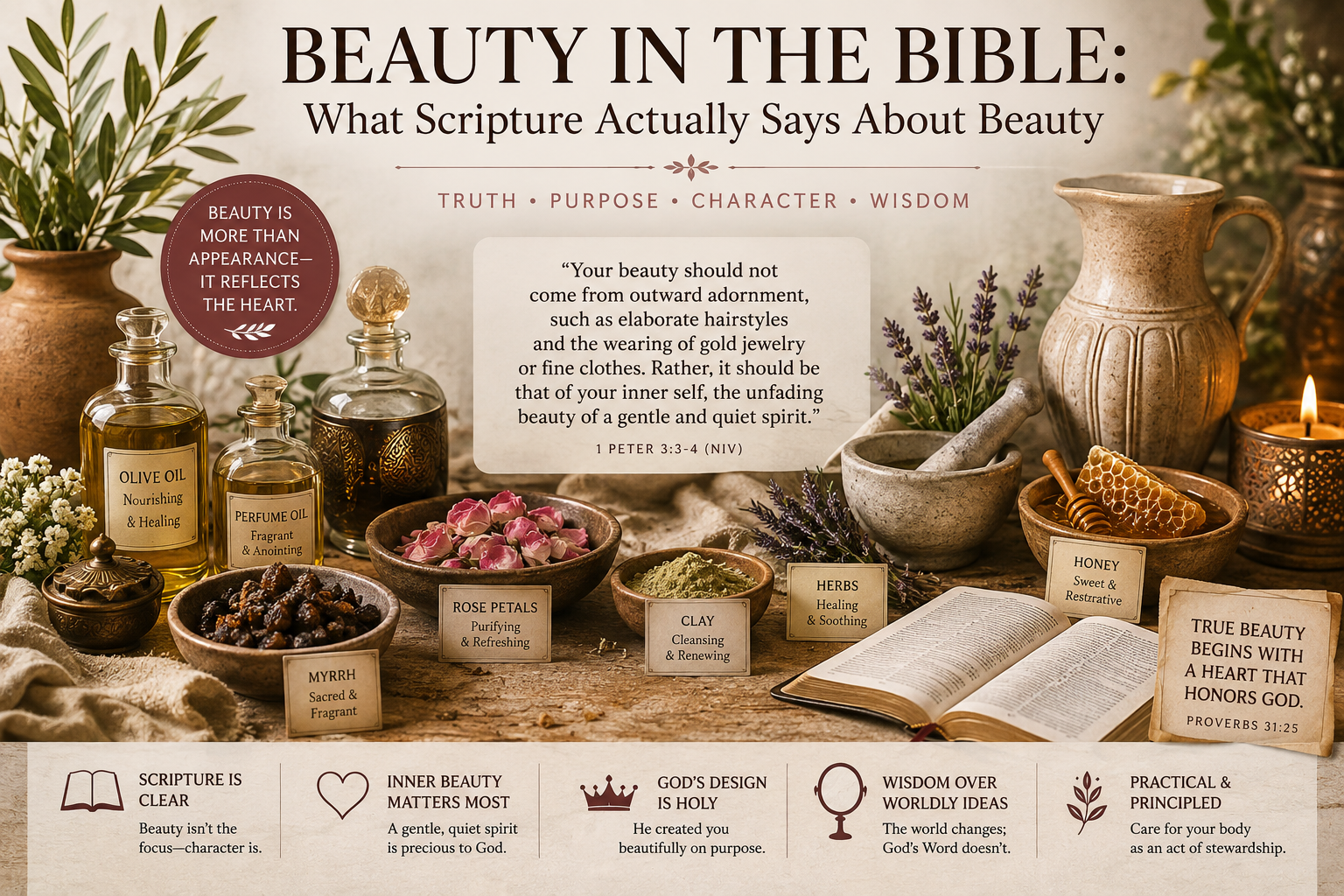
1 Peter 3:3-4 makes a related point to wives specifically: “Your beauty should not come from outward adornment, such as elaborate hairstyles and the wearing of gold jewelry or fine clothes. Rather, it should be that of your inner self, the unfading beauty of a gentle and quiet spirit, which is of great worth in God’s sight” (NIV).
1 Timothy 2:9-10 carries a similar instruction: dressing “modestly, with decency and propriety,” prioritizing “good deeds” over “elaborate hairstyles or gold or pearls or expensive clothes” (NIV).
Beauty Is Still Described Admiringly
At the same time, Scripture doesn’t treat physical beauty as irrelevant or shameful. Song of Solomon 4:7 has one lover telling the other, “You are altogether beautiful, my darling; there is no flaw in you” (NIV) — direct, physical, admiring language, without any caveat attached. Genesis describes several women — including Sarah, Rebekah, and Rachel — as beautiful, simply as fact, without moral commentary attached to the observation itself.
The Pattern Worth Noticing
Read together, these passages aren’t contradictory so much as they’re making different points in different contexts. Scripture doesn’t deny that physical beauty exists or that it can be genuinely appreciated. What it consistently pushes back against is the idea that physical beauty should be the primary thing pursued, displayed, or relied upon — particularly not at the expense of character, and particularly not as a woman’s central source of worth.
What This Article Isn’t Saying
This isn’t a claim that the Bible endorses or forbids any particular modern beauty practice — makeup, skincare, hairstyling. Scripture is addressing priority and posture (what beauty means, what it’s for, what it shouldn’t replace), not issuing product-by-product rulings on modern cosmetics. Claims that go further than that — that specific Bible verses “recommend” specific modern treatments — should be treated with real skepticism, which the rest of this series will address directly.
Where This Series Goes Next
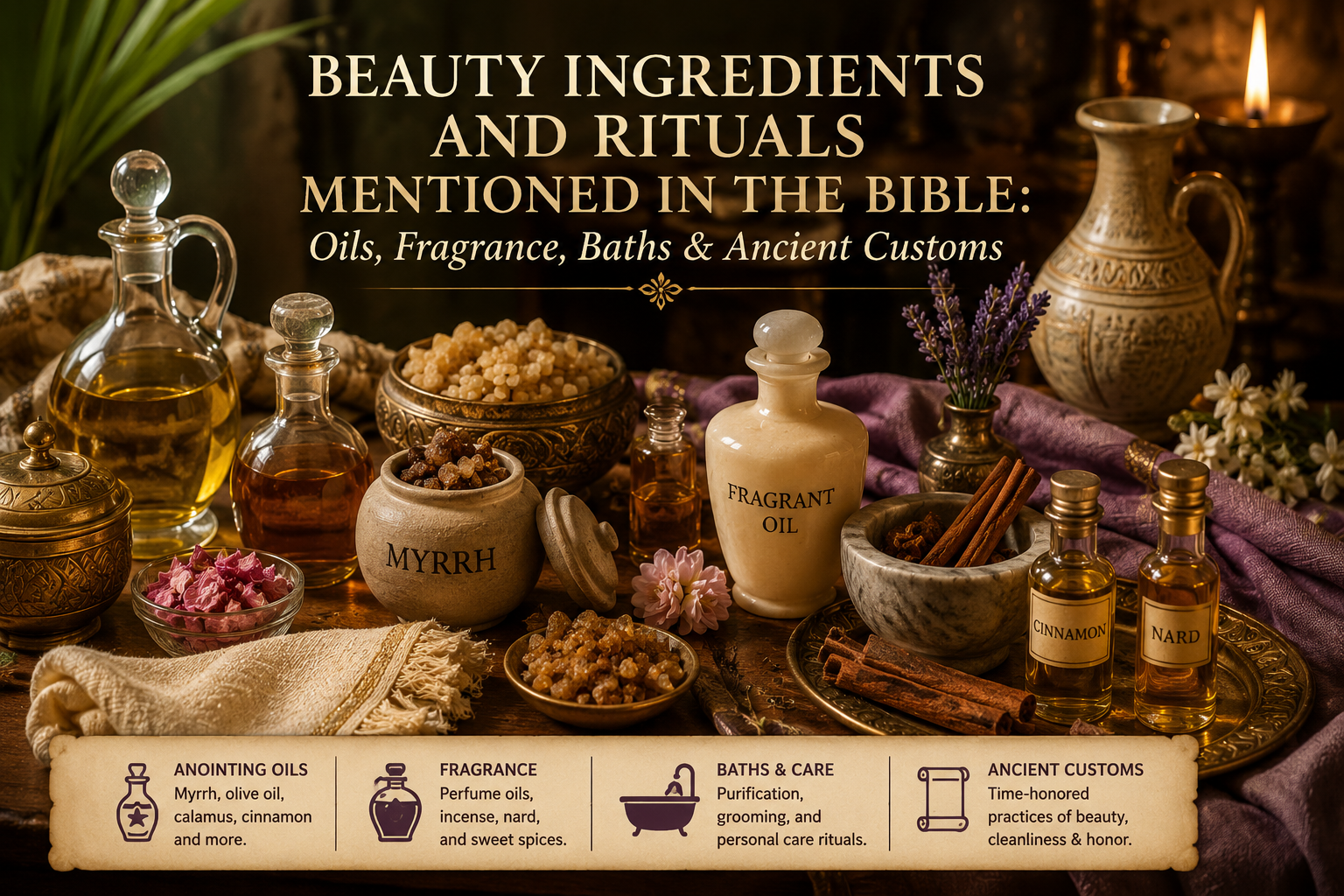
This article establishes the Bible’s actual posture toward beauty. The next three pieces in this series go deeper into specific texts — the beauty ingredients and rituals actually mentioned in Scripture, Esther’s specific preparation process, and the historical substances (myrrh, frankincense, and more) that show up throughout the biblical world.