
K-beauty has a reputation for innovation, and a lot of that reputation is earned — but “Korean” isn’t a skincare ingredient, and it’s worth separating the genuinely useful parts of this approach from the marketing momentum carrying the rest of it. If you’re over 40 and curious whether K-beauty is worth your attention (and your money), here’s an honest assessment.
What K-Beauty Actually Does Differently
Korean skincare culture tends to favor gentler formulations, lighter textures, and a strong cultural emphasis on daily sun protection — and Korean sunscreen formulation is genuinely well-regarded for texture and wearability compared to a lot of Western options. The regulatory environment in Korea (MFDS) has also approved specific ingredients like niacinamide and adenosine for functional anti-wrinkle and brightening claims, which has pushed some brands toward formulating with real, tested actives rather than vague “botanical” claims.
Where the Evidence Is Genuinely Strong
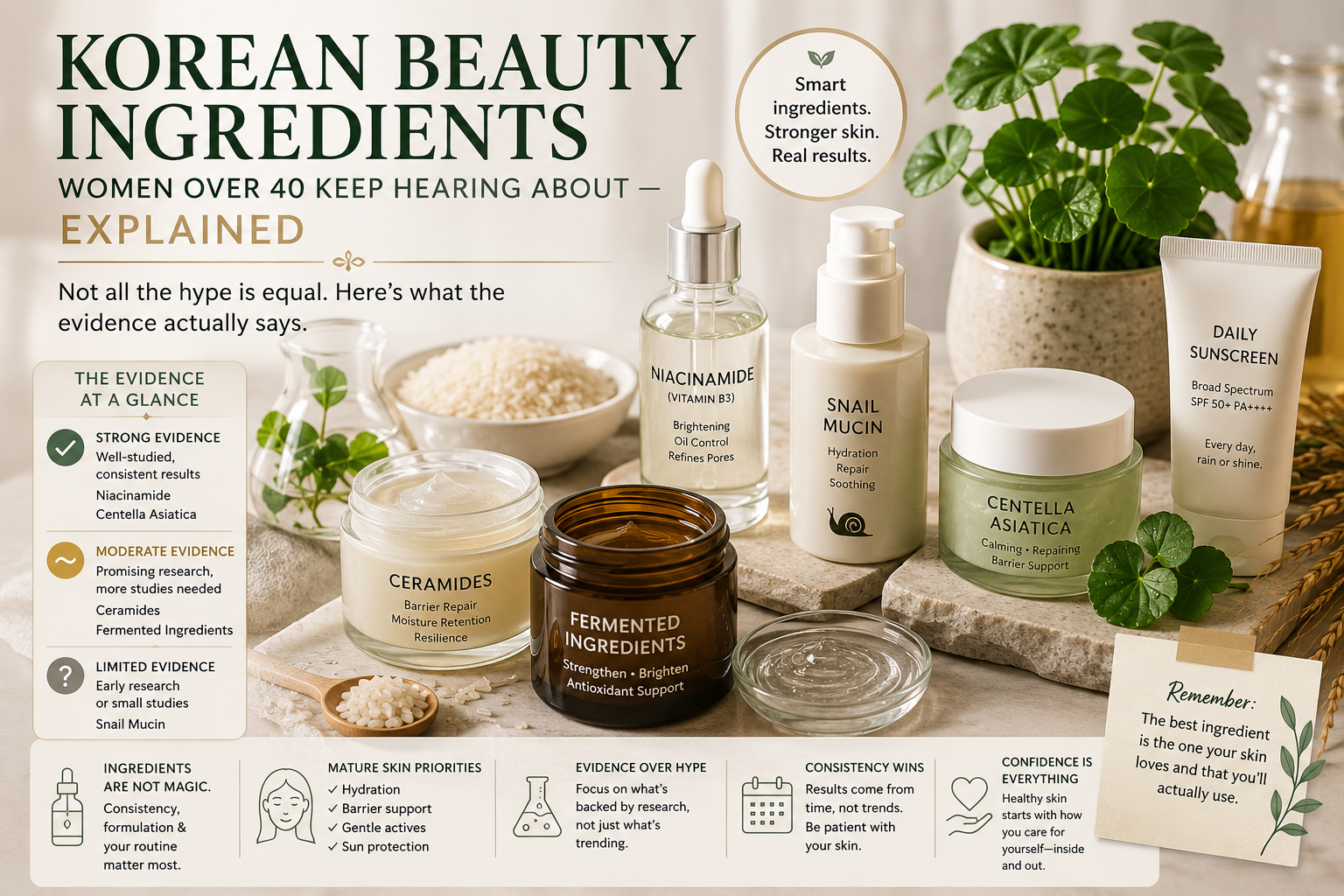
Two things stand out clearly: niacinamide (vitamin B3) is one of the most well-researched skincare ingredients available, with real evidence supporting its role in brightening, minimizing the look of pores, and supporting the skin barrier. And broad-spectrum sunscreen, which Korean skincare culture treats as completely non-negotiable, remains the single most evidence-backed anti-aging step in any skincare routine, from any country of origin.
Where the Evidence Is Moderate, Not Miraculous
Centella asiatica (cica) has real anti-inflammatory and barrier-supporting research behind it, and it’s genuinely useful for sensitive or reactive mature skin. Ceramides — lipid molecules essential to a healthy skin barrier — have solid support too, and mature skin in particular tends to benefit from barrier-focused formulas as natural ceramide production declines with age. These are good, evidence-supported reasons to try K-beauty products built around these ingredients specifically.
Where the Hype Outpaces the Research
Snail mucin is the ingredient most associated with K-beauty in the popular imagination, and it’s genuinely popular for a reason — it’s generally well-tolerated and there is at least one small published study on women aged 45 to 65 showing improvements in skin roughness, firmness, and elasticity. But dermatologists are quick to note there aren’t large, controlled, long-term trials confirming these effects, so it’s worth trying with reasonable expectations rather than assuming it will outperform better-studied ingredients. Fermented ingredients (galactomyces, propolis) and traditional botanicals like mugwort and ginseng are culturally significant and often pleasant to use, but currently have less controlled human research behind their specific skincare claims.
What This Means for Mature Skin Specifically
Mature skin tends to benefit most from consistent barrier support, daily sun protection, and well-tolerated actives introduced gradually — which happens to align well with K-beauty’s general gentleness and layering philosophy, even if not every trending ingredient is individually proven. The smartest approach isn’t “buy everything Korean” — it’s picking the specific, evidence-supported ingredients (niacinamide, centella, ceramides, sunscreen) and treating the rest as genuinely nice-to-try, not essential.
A Note Before You Start Anything New
If you have a diagnosed skin condition, are using prescription treatments, or are unsure how a new active might interact with your current routine, it’s worth checking with a dermatologist before adding anything new — this applies to any skincare trend, K-beauty included.