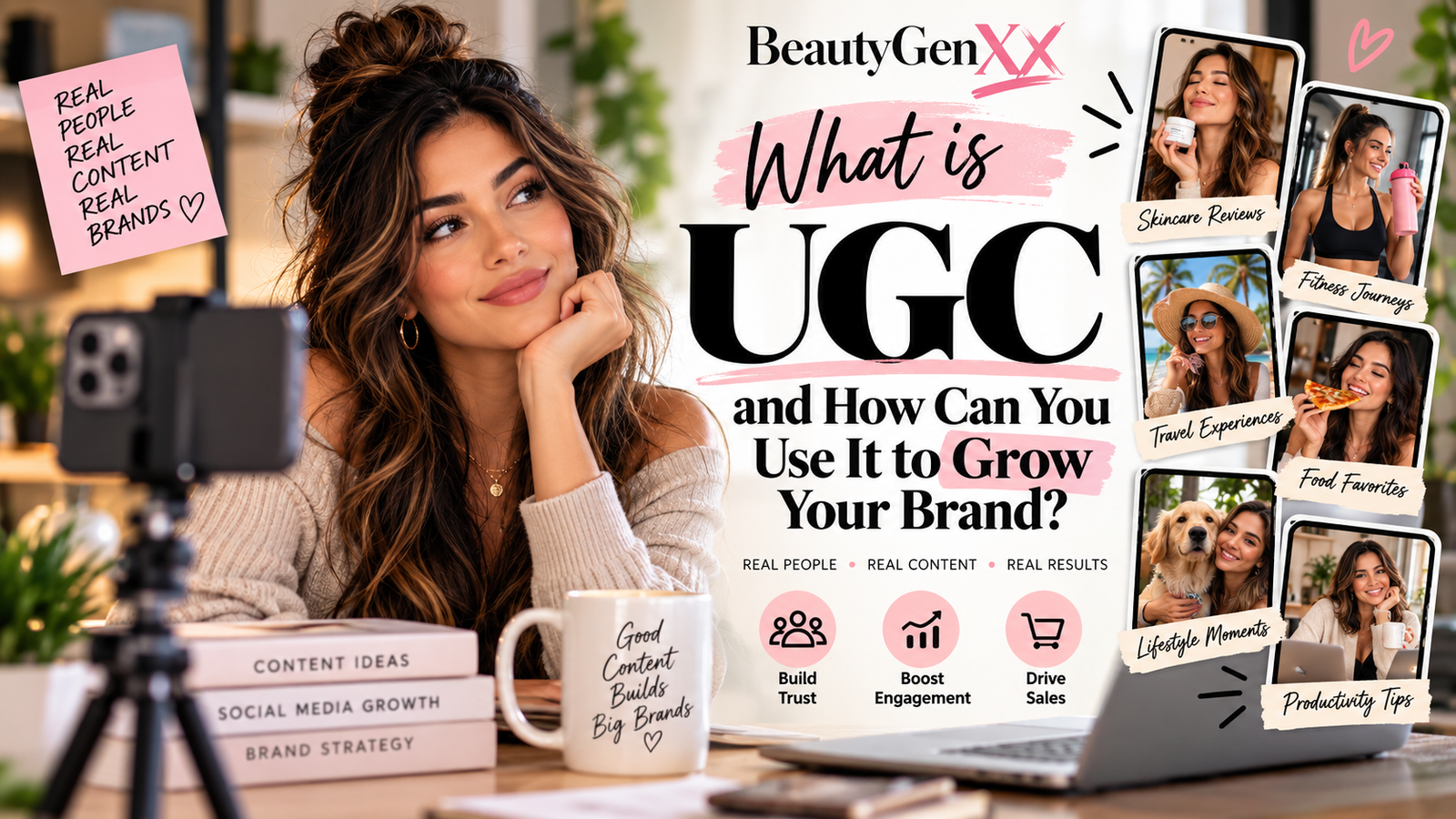
If you’ve spent any time on TikTok or Instagram lately, you’ve probably seen the letters “UGC” everywhere — in captions, in hashtags, even in job listings for content creators. But what does it actually mean, and why does it matter so much for a beauty brand like ours?
What is UGC?
UGC stands for User-Generated Content — any content (photos, videos, reviews, posts) created by real people rather than by a brand’s own marketing team, showing or talking about a product or experience.
Think about the difference between a polished skincare commercial shot in a studio versus a casual video of someone in their bathroom, natural light, talking straight to the camera about how a product changed their skin. The second one feels real. And that authenticity is exactly why UGC works so well.
Why UGC performs better than traditional ads
- It feels authentic, not like an advertisement
- It builds trust faster than traditional branded content
- It performs better on algorithm-driven platforms like TikTok and Instagram, which reward “real” over “produced”
- It’s far cheaper to create than a full studio production
UGC no longer requires a camera or a human creator
Here’s the biggest shift in the last year: thanks to AI, you can now create UGC-style images and videos without hiring a creator or filming anything yourself.
Using AI tools like Midjourney, Leonardo AI, or Flux, you can generate “avatars” — AI-generated people — holding a product, talking to camera, or demonstrating a routine, all with the natural, homemade look of traditional UGC. None of it is a real person, but visually it does the same job: it looks authentic, relatable, and trustworthy.
This has opened the door for solo entrepreneurs and small beauty brands who don’t have the budget to hire human UGC creators but still want that same authentic feel across their content.
How to start using UGC (with or without AI)
- Define your niche and product. The more specific the scene — skincare routine, makeup application, haircare — the better the result.
- Write a clear prompt if you’re using AI. Describe the scene, lighting, angle, and action (for example: “selfie of a woman applying moisturizer in front of a bathroom mirror, natural light, casual homemade style”).
- Prioritize authentic over polished. Successful UGC never looks “produced.” Avoid studio backdrops, overly professional lighting, or forced poses.
- Repurpose one idea across formats. A single concept can become a Reel, a static post, a Story, or a carousel.
- Test and adjust by platform. What performs on TikTok doesn’t always perform the same way on Instagram or Facebook.
The bottom line
UGC isn’t just a trend — it’s how beauty brands build trust today. And with new AI tools, even a solo brand can create that same authentic, relatable content that connects with an audience, without needing a full production team.
If you’re building out your beauty content strategy, now’s a great time to experiment with UGC — whether that means filming it yourself or trying the AI tools making it possible without a camera at all.