The previous articles in this series looked closely at specific verses. This one steps back to the wider historical picture: what were these substances, actually, and what did the world look like for the women whose stories include them? This is history and biblical culture together — not a skincare guide.
What Myrrh Actually Is
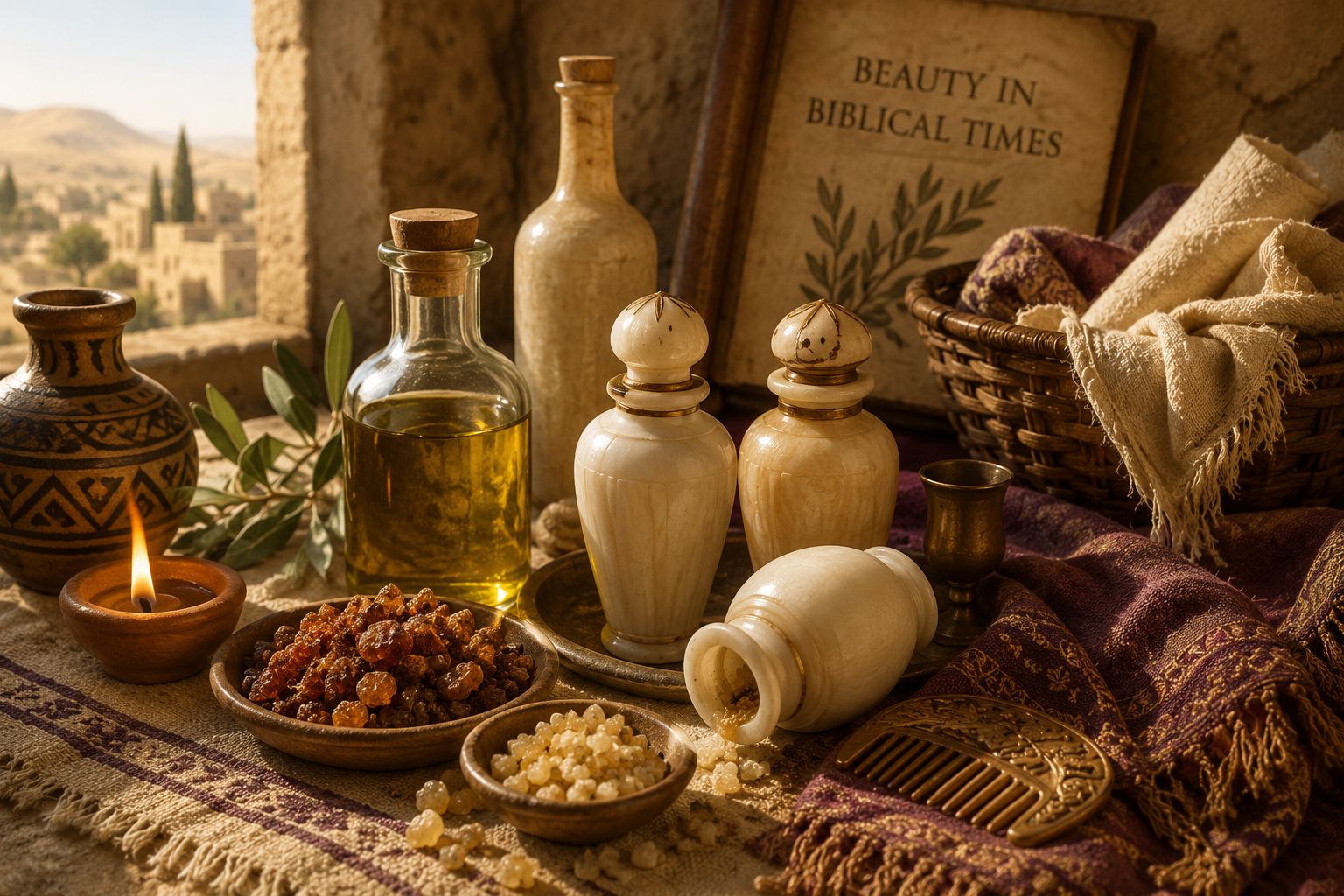
Myrrh is a resin that comes from trees in the Commiphora genus, native to parts of the Arabian Peninsula and the Horn of Africa. Historically, it was harvested by cutting the bark and collecting the resin that seeps out and hardens. It was genuinely valuable across the ancient world — used in perfumery, incense, and embalming practices in multiple ancient cultures, not exclusively in the biblical world. Its appearance in Scripture (the anointing oil recipe, the Magi’s gift, Mary’s later devotion at Jesus’s tomb) reflects this real, historically documented value rather than any invented significance.
What Frankincense Actually Is
Frankincense is likewise a resin, from Boswellia trees, historically traded from regions including modern-day Yemen, Oman, and Somalia. Along with myrrh, it traveled significant trade distances to reach the biblical world, which is part of why both substances carried real monetary and symbolic weight — being given frankincense and myrrh, as in Matthew 2:11, was a genuinely valuable gift in real economic terms, not merely a poetic gesture.
Daily Life and Grooming in the Ancient Near East
Historically speaking (separate from what any specific Bible verse states), archaeological and historical scholarship on the ancient Near East indicates that oils were commonly used for basic skin care and protection against a dry climate, and that fragrance held genuine social and religious significance — used in worship, in hospitality customs (anointing a guest’s head was a mark of honor), and in personal grooming among those who could afford it. This is general historical context, not a claim about what any individual biblical woman specifically did, unless a text explicitly says so.
Perfume as Trade and Status
Perfume-making in the ancient world was a genuine skilled craft — Exodus 30:25 explicitly refers to the “art of the perfumer” as an established profession, implying real technical knowledge involved in blending resins, oils, and aromatics. Owning or using costly perfume, as in the account of the woman anointing Jesus with spikenard, carried real social and economic meaning that a modern reader can miss without this context.
What We Don’t Know
It’s worth being honest about the limits here too: Scripture gives us specific, real details about certain rituals and substances, but it doesn’t give us a comprehensive picture of everyday grooming for ordinary women in the biblical world — much of what’s written about “daily beauty routines in Bible times” beyond the specific texts is reasonable historical inference, not direct scriptural or even fully certain historical record, and should be presented that way rather than as settled fact.
The Point of Looking Closer
Understanding the real historical weight of myrrh, frankincense, and perfume doesn’t just add trivia — it changes how you read the actual biblical passages. A gift of frankincense and myrrh reads differently once you know these were genuinely costly, traded goods. An act of anointing carries more weight once you understand it as a real social and religious custom, not just poetic language. That’s the value of history alongside Scripture — not replacing the text, but helping it land with its actual original weight.