
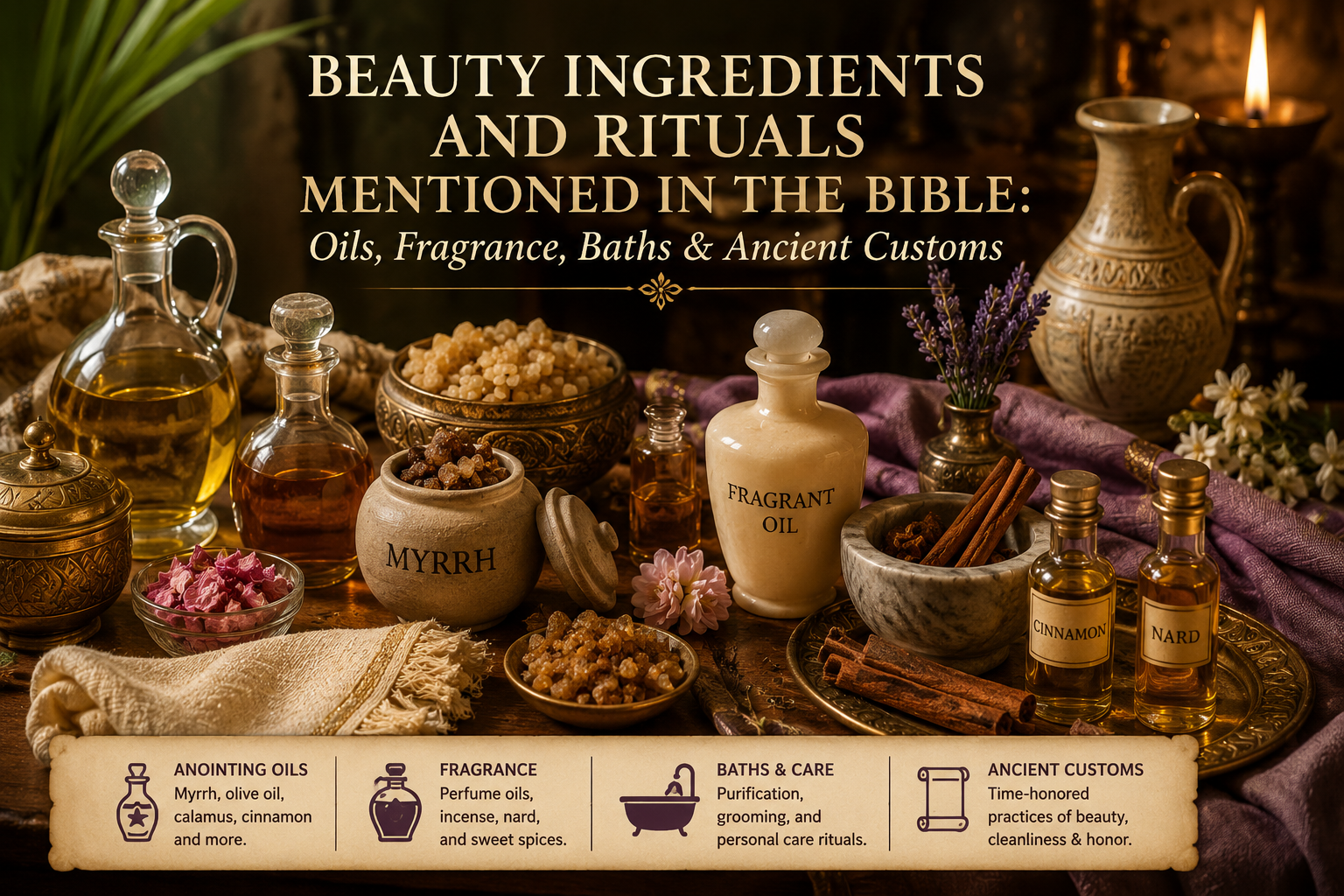
Scripture genuinely does reference oils, fragrances, and grooming customs throughout — this isn’t a myth. But there’s a real difference between what these passages describe and how modern “biblical beauty” content often repurposes them. Here’s what’s actually in the text.
The Holy Anointing Oil (Exodus 30) — And an Important Correction
Exodus 30:22-25 gives an actual recipe: “liquid myrrh,” “sweet-smelling cinnamon,” “aromatic cane” (calamus), “cassia,” and olive oil, “blended as by the perfumer” into a “holy anointing oil.” This is real, specific text.
Here’s the correction most modern content leaves out: this oil was made exclusively to consecrate the tabernacle, its furnishings, and the priests (Exodus 30:26-30) — and the text explicitly forbids replicating it for personal use. Exodus 30:32-33 states it “shall not be poured on man’s flesh,” and that anyone who makes something like it for themselves is to be “cut off from his people.” Whatever this recipe was for, Scripture is explicit that it was not a personal beauty product, and any modern claim presenting it as a skincare recipe is misreading the text.
The Holy Incense (Exodus 30:34-36)
A separate, also-restricted formula: stacte, onycha, galbanum, and frankincense, blended in equal parts. Like the anointing oil, this incense was set apart for sacred use, not personal or cosmetic application (Exodus 30:37-38).
Song of Solomon’s Garden of Spices
Song of Solomon 4:14 names an entire list of aromatic plants in poetic, romantic context — “nard and saffron, calamus and cinnamon, with every kind of incense tree, with myrrh and aloes.” This is love poetry describing fragrance as part of romantic and physical appeal, not a beauty regimen or product instruction.
Costly Spikenard (Mark 14:3, John 12:3)
In the Gospels, a woman (identified as Mary in John’s account) anoints Jesus with “pure nard, an expensive perfume” (Mark 14:3, NIV) shortly before his death — an act of devotion and honor, described as costly enough to provoke objection from onlookers about its expense. This is a devotional act, not a grooming routine, and the text frames it that way.
Frankincense and Myrrh as Gifts (Matthew 2:11)
The Magi bring the child Jesus “gold, frankincense, and myrrh” (Matthew 2:11, NIV). Historically, both substances were valuable aromatic tree resins traded at real expense across the ancient world — their inclusion here signals honor and worth, not a specific cosmetic use.
Eye Cosmetics — Mentioned, but Consistently in a Cautionary Light
2 Kings 9:30 describes Jezebel, right before her downfall, having “painted her eyes” before appearing at a window — literally, in the Hebrew, having “put her eyes in paint” (a kohl-like antimony-based pigment, per historical commentary). Jeremiah 4:30 uses similar imagery (“enlargest thine eyes with paint,” KJV) addressed to unfaithful Jerusalem, personified. It’s worth being honest about the pattern here: every direct biblical reference to eye cosmetics specifically is tied to a negative or cautionary context, not a celebratory one. This doesn’t mean Scripture forbids modern eye makeup — the text isn’t making a ruling on 21st-century cosmetics — but it does mean claims that the Bible “celebrates” eye makeup specifically aren’t supported by these particular passages.
What’s Actually There, Summarized Honestly
The Bible references real aromatic substances — myrrh, frankincense, spikenard, cinnamon, calamus — in contexts of worship, devotion, romantic poetry, and (in the case of eye paint) caution. What it doesn’t do is present a beauty routine, a skincare recipe intended for personal use, or product recommendations. Any content claiming otherwise is adding something the text itself doesn’t say.