
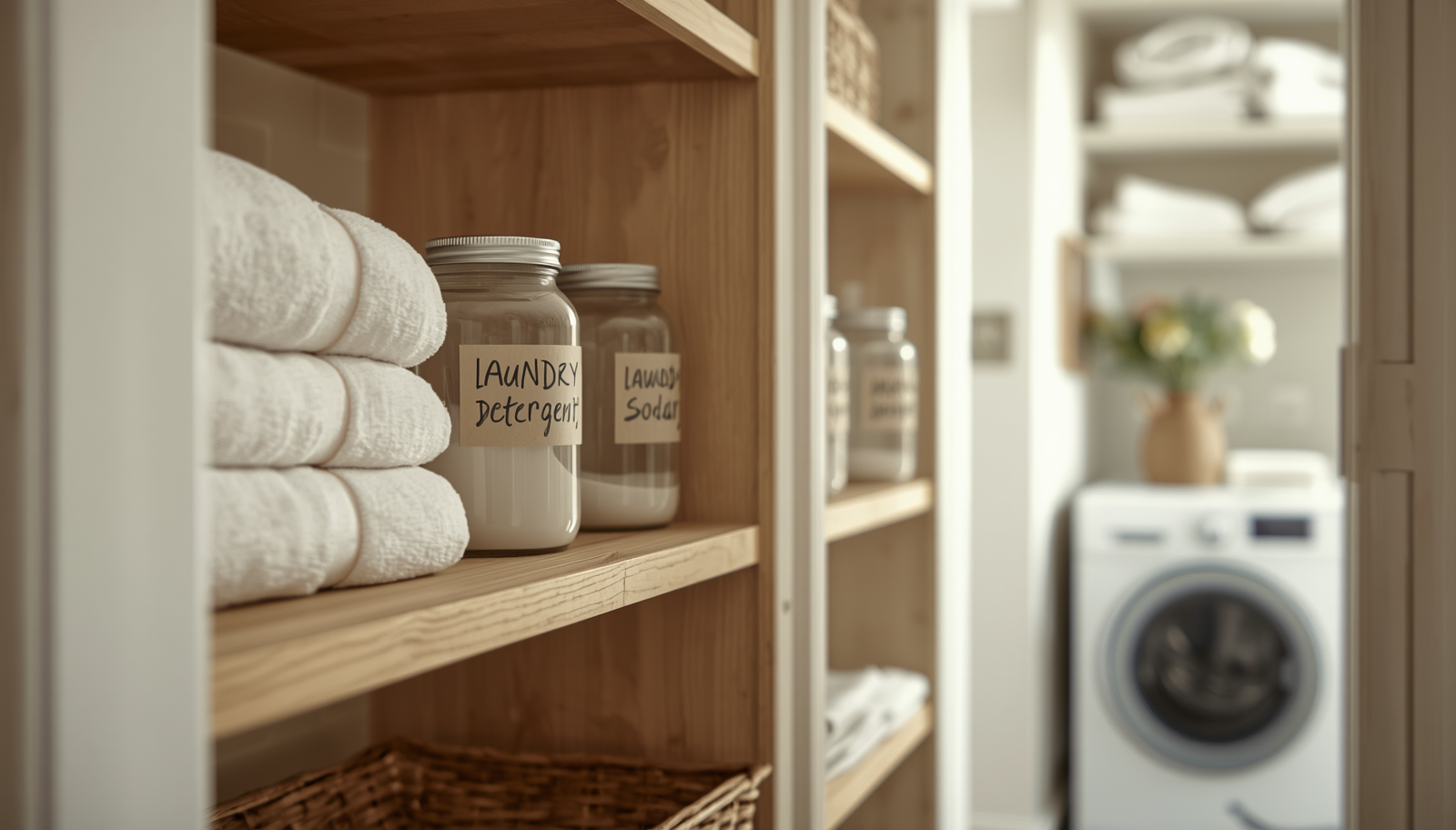
Grocery savings aren’t just about food. Cleaning products are one of the most marked-up categories in the store, and there’s a long history — across a lot of different cultures — of making your own instead. Here’s a base recipe to start with, plus a few specific traditional methods worth knowing.
A base DIY laundry detergent (borax-free)
This is a widely used, borax-free version that scores well on independent safety scales for household cleaners. In a large pot, dissolve 1 cup of washing soda into 2 cups of boiling water. Stir in baking soda a tablespoon at a time — about 6–8 tablespoons total — until it thickens slightly. Stir in ½ cup of liquid castile soap. Let it cool and separate overnight, then whisk it smooth before using. It costs a fraction of store-bought detergent per load and works well for standard loads; skip it for very heavily soiled or greasy workwear, where a stronger commercial detergent may still do better.
No washing soda on hand? You can make your own by spreading baking soda on a baking sheet and baking it at 400°F for about an hour — the heat converts it from sodium bicarbonate into sodium carbonate.
A traditional Filipino all-purpose cleaner: calamansi and vinegar
In Filipino households, calamansi — a small citrus similar to a mix of lime and mandarin — is a everyday cleaning staple. Mix equal parts white vinegar and water, then squeeze in fresh calamansi juice. The acidity cuts through grease and soap scum and leaves a fresh scent, and it’s commonly used on kitchen counters, stovetops, and greasy surfaces. Don’t have calamansi? A lime or lemon works as a substitute — the citric acid does the same job.
A traditional Indian method: reetha (soap nuts) for laundry
Reetha, also called soap nuts, are dried berries from the Sapindus tree that have been used across India for generations as a natural laundry cleanser. Their shells contain saponins — natural compounds that lather and lift dirt the way synthetic surfactants do. To use: boil 4–6 soap nuts in about 6 cups of water for 15–20 minutes, let it cool, and strain. Use roughly a cup of the liquid per load. They’re gentle enough for delicate fabrics like silk and wool, and the same soap nut liquid doubles as a general household cleaner.
A widely used home remedy: vinegar and baking soda for whitening
This one shows up across many households and generations: soak whites in a mix of ½ cup baking soda and ½ cup white vinegar (added separately, not combined in the same container, since they react) before a normal wash cycle. Baking soda helps brighten and deodorize; vinegar’s acetic acid breaks down soap residue and mineral buildup from hard water. It won’t outperform bleach on set-in stains, but it’s a solid, gentler default for regular brightening.
A simple glass and mirror cleaner
Mix 1 cup rubbing alcohol, 1 cup water, and 1 tablespoon of white vinegar in a spray bottle. It evaporates quickly, leaves no streaks, and works on glass, mirrors, chrome, and tile — genuinely competitive with name-brand glass cleaners.
None of these require anything exotic — most of the ingredients are already in your kitchen. The savings add up quietly, one refill you didn’t have to buy.