
Real grocery savings aren’t just about what’s on sale this week — they’re about what you stop needing to buy at all. Here’s a deeper list, including a few things most grocery advice skips entirely.
Where you shop matters more than people think
Trader Joe’s has built a reputation for being both healthier and noticeably cheaper than traditional chains like Vons or Albertsons on a lot of staples, since it runs mostly private-label products with less markup. Food co-ops are worth a look too if there’s one near you — buying in bulk collectively through a co-op membership often beats big-chain pricing on staples like grains, nuts, and oils, especially if you’re a regular shopper there rather than a one-time visitor.
Grow what you’d otherwise buy at a premium
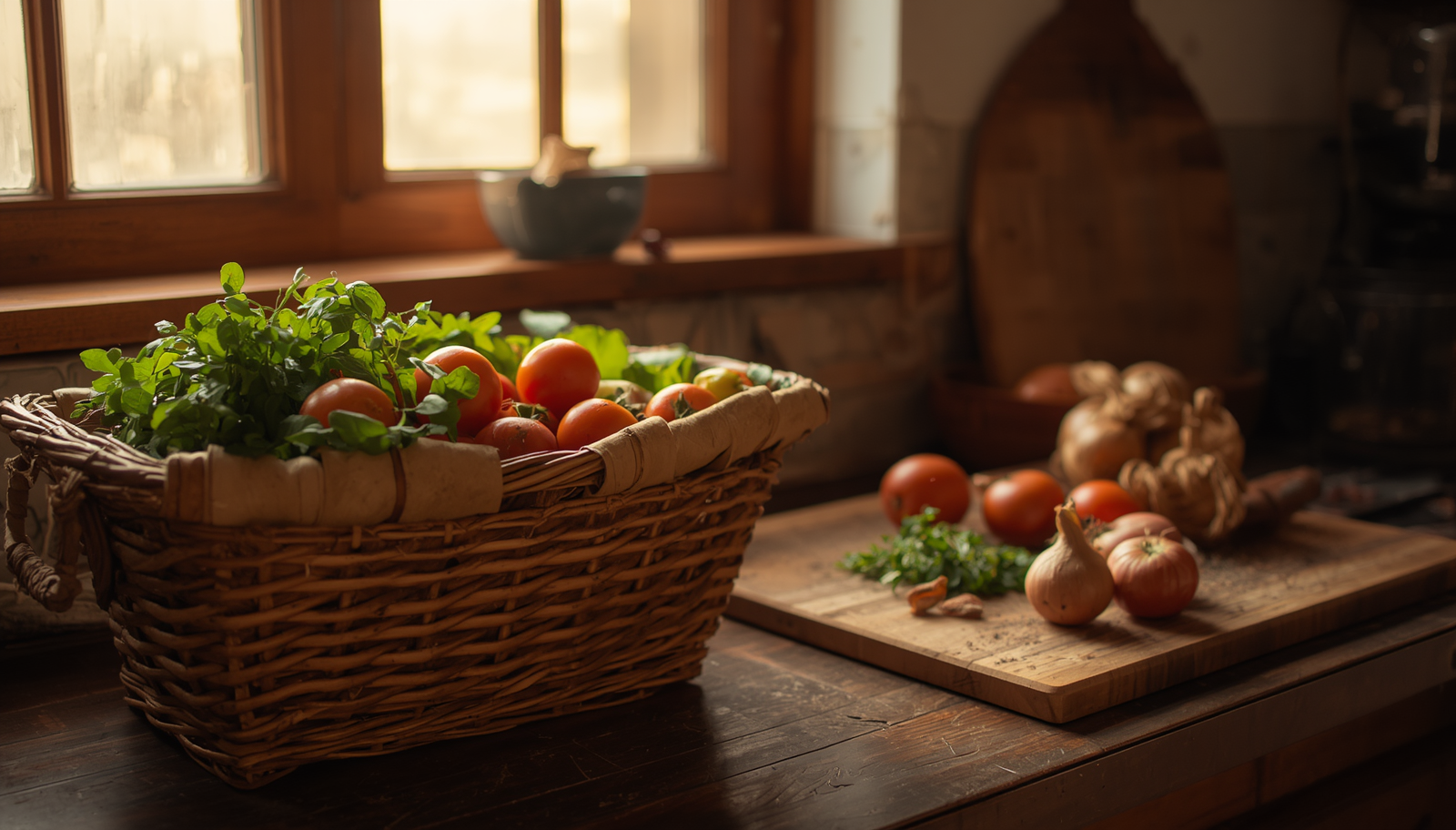
Herbs are one of the highest markup items in the store relative to what they cost to grow. A small pot of basil, thyme, or rosemary on a windowsill pays for itself within a few uses. If you have any yard space, tomatoes are worth prioritizing — they’ve been one of the more expensive produce items this year — along with onions and peppers, all of which grow relatively easily in Southern California’s climate. A fruit tree is a longer-term investment, but a single mature lemon, orange, or fig tree can meaningfully cut what you spend on produce year after year.
Make it yourself: bread and household staples
If your household eats bread regularly, baking it yourself is one of the more overlooked savings — a loaf costs a fraction of what a bakery loaf runs, and you control the ingredients. The same logic applies beyond food: household products like laundry detergent, all-purpose cleaner, and dish soap can be made at home for a fraction of store-bought prices. We’ve put together a full guide with exact recipes for these, including a few traditional methods from around the world — read it here.
Preserve what you grow instead of buying it processed
If you’re already growing herbs, peppers, or fruit, a food dehydrator lets you take it further. Dried red bell peppers can be ground into your own paprika. Homegrown fruit becomes shelf-stable dried fruit instead of something that spoils in a few days. Spices in particular are one of the most marked-up items in a grocery store relative to their actual cost — making your own from what you’ve grown cuts that expense out almost entirely.
Buy meat directly from a farm or ranch
If you eat a reasonable amount of beef, buying directly from a local farm or rancher — a quarter, half, or whole cow — is genuinely one of the biggest savings available. Based on current 2026 pricing, a half cow typically runs $1,500–$3,500 total, working out to roughly $6–$10 per pound across all cuts combined, once processing fees are factored in. That’s typically 30–50% less than equivalent grocery store prices, and the savings are most dramatic on premium cuts — you end up paying close to ground-beef prices for cuts like ribeye or NY strip. The tradeoffs: you need the money upfront, freezer space (a half cow needs roughly 8–10 cubic feet), and a willingness to cook the full range of cuts, not just the popular ones. For a family of four to six, this can realistically cover a full year of beef.
Buy bulk items online
For pantry staples you go through regularly — rice, oats, dried beans, coffee — ordering in bulk online is often noticeably cheaper per unit than buying small quantities repeatedly in-store, and it means fewer trips where impulse items end up in the cart.
Rethink water — for your wallet and your health
A home water filter system pays for itself quickly compared to buying bottled water repeatedly, and it’s the more environmentally sound choice too. One related thing worth knowing: single-use plastic drip coffee filters and plastic mesh filters have been shown in testing to release measurably more microplastic particles into your cup than paper or metal do — standard unbleached paper filters test as essentially negligible, and stainless steel reusable filters avoid the issue entirely, though they let a bit more oil and fine grounds through. If you’re using a plastic pod or mesh filter daily, switching to a reusable metal filter or unbleached paper is a small change with a real difference.
None of this is about doing without. It’s about knowing where the real savings are — some of them at the register, and some of them in what you never had to buy in the first place.
This is really just the start. I know what it’s like to get swept up in the excitement of finally getting organized — the first time you make your own sourdough from scratch and realize you’ll never go back to store-bought, or the first jar of homemade detergent that actually works. I’ve been doing a lot of this myself for years, and there’s a lot more I want to share. Consider this the first post in an ongoing series.