Every time senior royals appear at a major ceremony, social media fills up with the same question: what is all of that? The velvet robes, the diagonal sashes, the stars pinned to a chest, the plumed hats, the sudden military uniform at an event that has nothing to do with the military — none of it is random, and almost none of it is just for show. Nearly every piece has a specific history, a specific rule about who can wear it and when, and a specific reason it’s on display that day.
Prince William as a Current Example
Prince William’s ceremonial wardrobe is a useful way into this topic because his documented roles cover most of the major categories: chivalric order membership, honorary military appointments, and actual military service.
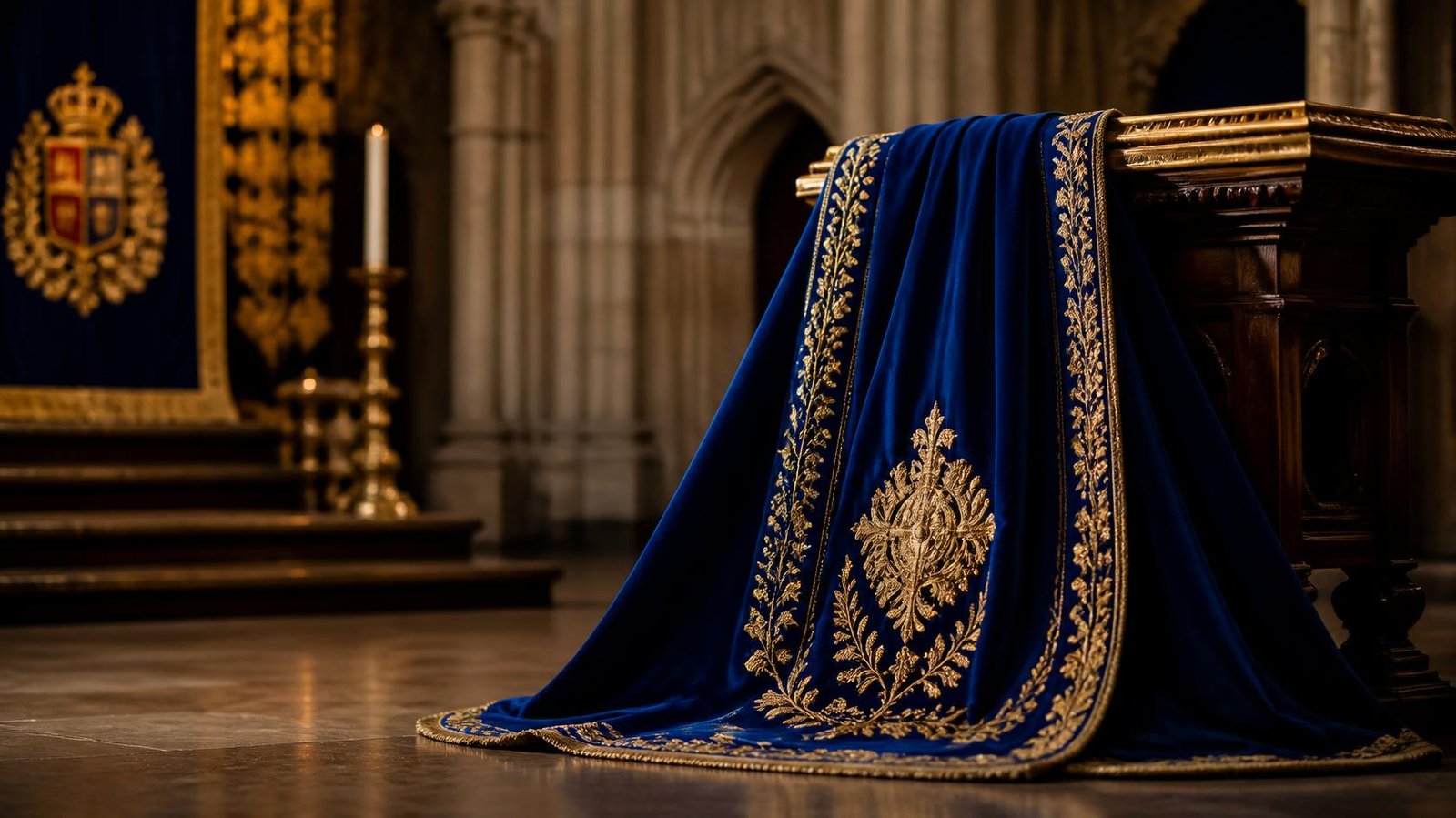
The Order of the Garter. In 2008, Queen Elizabeth II appointed William a Royal Knight Companion of the Order of the Garter — becoming the 1,000th knight recorded in the order’s register since its founding in 1348, according to the official announcement on the Royal Family’s website. He took part in that year’s Garter Day procession at Windsor Castle on June 16, 2008, in the traditional dark blue velvet mantle lined with white satin, black ostrich-plumed hat, and the order’s insignia. His then-girlfriend Kate Middleton attended the ceremony as a guest that same year, three years before their wedding.
His 2011 wedding uniform. According to the official royal.uk description issued at the time, William chose to wear the uniform of Colonel of the Irish Guards for his wedding — described as “his senior honorary appointment in the Army.” The same official statement notes he was “commissioned in all three Armed Services” and had served actively with the Army’s Household Cavalry Regiment and with the Royal Air Force’s Search and Rescue Force. For the wedding specifically, he wore an Irish Guards Mounted Officer’s uniform, a gold and crimson sash, gold sword slings, the Garter Sash, RAF wings, the Garter Star, and the Golden Jubilee Medal — each element tied to a documented role or honor, not decorative choice.
Note on identifying specific footage: This article discusses William’s documented ceremonial roles broadly. Without direct visual confirmation, it doesn’t attempt to identify the exact event or outfit shown in any specific video circulating online — the details below explain what these categories of dress generally mean so viewers can better understand what they’re seeing.
The Order of the Garter
The Order of the Garter is the oldest and most senior order of chivalry in Britain, founded by King Edward III in 1348. According to the Royal Family’s own account, Edward III was inspired by tales of King Arthur and the Knights of the Round Table when he established the order.
Membership is a personal gift of the monarch — appointments are made without ministerial advice, historically given to honor public service, national contribution, or personal service to the sovereign. According to the official UK Honours System, this discretion applies specifically to the Garter, the Thistle, the Royal Victorian Order, and the Order of Merit. The order’s structure includes the Sovereign, the Prince of Wales, additional Royal Knights and Ladies Companion (senior working royals), and 24 Knights and Ladies Companion chosen from outside the family.
Garter Day takes place annually in June at Windsor Castle. New members are formally invested in the Garter Throne Room, after which knights and ladies process in full regalia — velvet mantles, plumed hats, and insignia — from the castle to St George’s Chapel for a religious service. St George’s Chapel has served as the order’s spiritual home since the medieval period. The garter itself, from which the order takes its name, is a dark blue velvet strap bearing the order’s motto in Old French: Honi soit qui mal y pense — “shame on him who thinks evil of it.”
Royal Sashes, Stars, Medals & Orders
The colored diagonal band seen on formal royal dress is properly called a riband, not a sash, and it signifies membership in a specific order of chivalry or merit. A riband is typically worn with a badge (positioned at the hip) and a star (worn on the chest); the most senior order a person holds generally determines which riband they wear at a given event, since typically only one is worn at a time even when someone holds several honors.
A few documented examples:
- The Order of the Garter riband is royal blue, worn from the left shoulder, paired with a breast star featuring the red cross of St George and the order’s motto. Membership is limited to 24 Companions outside the royal family.
- The Order of the Thistle, according to the official Royal Family website, is Scotland’s most senior order of chivalry, formally established in 1687 by King James VII. Its riband is worn with green velvet robes, and membership is limited to 16 Knights and Ladies, plus Royal Knights. Its home is the Thistle Chapel at St Giles’ Cathedral in Edinburgh — a different chapel from the Garter’s home at Windsor.
- The Royal Victorian Order is given personally by the monarch, without public ceremony or government involvement, specifically in recognition of personal service to the sovereign.
Medals are a related but distinct category — commemorative medals (such as jubilee medals marking a specific royal anniversary) are awarded broadly and don’t require the same order membership structure that ribands and stars represent.
Military Uniforms & Honorary Appointments
Senior royals appear in military uniform even at non-military events for a specific reason: many hold honorary military appointments — colonelcies, honorary air commodore roles — that are formally distinct from active military service, though some royals have held both.
William’s own service history is documented in detail on the official Royal Family website. He was commissioned as an Army officer in December 2006 and joined the Household Cavalry (The Blues and Royals) as a Second Lieutenant, later promoted to Lieutenant. He began training as a Search and Rescue pilot in early 2009 and, in September 2010, joined C Flight, 22 Squadron at RAF Valley in Anglesey. Over three years in that role, he undertook 156 search and rescue operations and a deployment to the Falkland Islands, qualifying as an operational Captain — a genuine operational role, not an honorary one. Separately, in February 2011, Queen Elizabeth II gave formal approval for William to become Colonel of the Irish Guards — described by royal.uk as his first honorary appointment in the Army.
This is why uniform choice at a given event matters and varies: a royal may wear the uniform tied to a specific honorary colonelcy relevant to that occasion, rather than simply their highest-ranking military affiliation. At King Charles III’s coronation, for example, William wore the ceremonial dress uniform of the Welsh Guards, reflecting his position as that regiment’s colonel — along with his RAF pilot’s wings, earned through his actual flying service, and several jubilee medals, according to reporting from Forces News, the UK military’s own news service.
Robes of State & Ceremonial Robes
Not every robe means the same thing, and it’s worth being specific about which robe appears at which event.
The Robe of State, also called the Parliament Robe, is worn by the reigning monarch specifically — a long mantle with a crimson velvet train lined and trimmed with ermine. According to royal.uk, the monarch dons the Robe of State and the Imperial State Crown in the Robing Room before the State Opening of Parliament, then processes to the House of Lords to deliver the monarch’s speech. A version of this robe is also worn by the monarch entering Westminster Abbey at the start of a coronation, before being exchanged for other coronation vestments later in the service.
This is distinct from the velvet mantles worn at Garter Day, which belong to Knights and Ladies of the Garter specifically (including non-monarch royals like William) and are tied to that order alone, not to the monarch’s constitutional role.
In short: Robe of State appearances are monarch-specific and tied to Parliament or coronation. Garter robes belong to Garter Day and Garter membership. The two should not be treated as interchangeable just because both are described as “royal robes.”
Why These Traditions Still Exist
Britain’s ceremonial system has persisted for centuries for a few concrete, documented reasons rather than pure nostalgia: chivalric orders like the Garter continue to function as the monarch’s personal mechanism for honoring public service outside of government-recommended honors; military appointments maintain a visible, centuries-old link between the Crown and the armed forces; and events like the State Opening of Parliament serve an active constitutional function, formally uniting the Sovereign, Lords, and Commons at the start of each parliamentary session. The regalia isn’t preserved as costume — each piece is tied to a role, an order, or a constitutional function that’s still active today.
Quick Guide / FAQ
Why does Prince William wear a sash?
Because he holds membership in specific orders — most visibly the Order of the Garter — and a riband (commonly called a sash) is the standard way that membership is displayed at formal events.
What is the star worn on royal uniforms?
A breast star is part of the insignia of a specific order of chivalry, worn alongside the riband and badge of that same order. Its design (a cross, a national emblem, a motto) corresponds to that specific order.
What is the Order of the Garter?
The oldest and most senior British order of chivalry, founded in 1348 by Edward III, with membership given personally by the monarch.
Why do royals wear military uniforms?
Some hold genuine military service history; many more, or additionally, hold honorary appointments (colonelcies among them) tied to a specific regiment or service, and the uniform worn typically reflects the appointment most relevant to that event.
Why do they wear velvet robes?
It depends entirely on the event. Garter Day robes belong to that order specifically. The Robe of State belongs to the monarch’s role at the State Opening of Parliament and coronation. They are not the same robe or the same tradition.
Are royal medals decorative or earned/appointed honors?
Both categories exist. Order memberships (Garter, Thistle, Royal Victorian Order) are formally appointed honors with specific criteria. Commemorative medals, such as jubilee medals, mark a specific occasion and are distributed more broadly.
What is Garter Day?
The Order of the Garter’s annual ceremony at Windsor Castle each June, including the investiture of new members and a procession in full regalia to St George’s Chapel for a service.