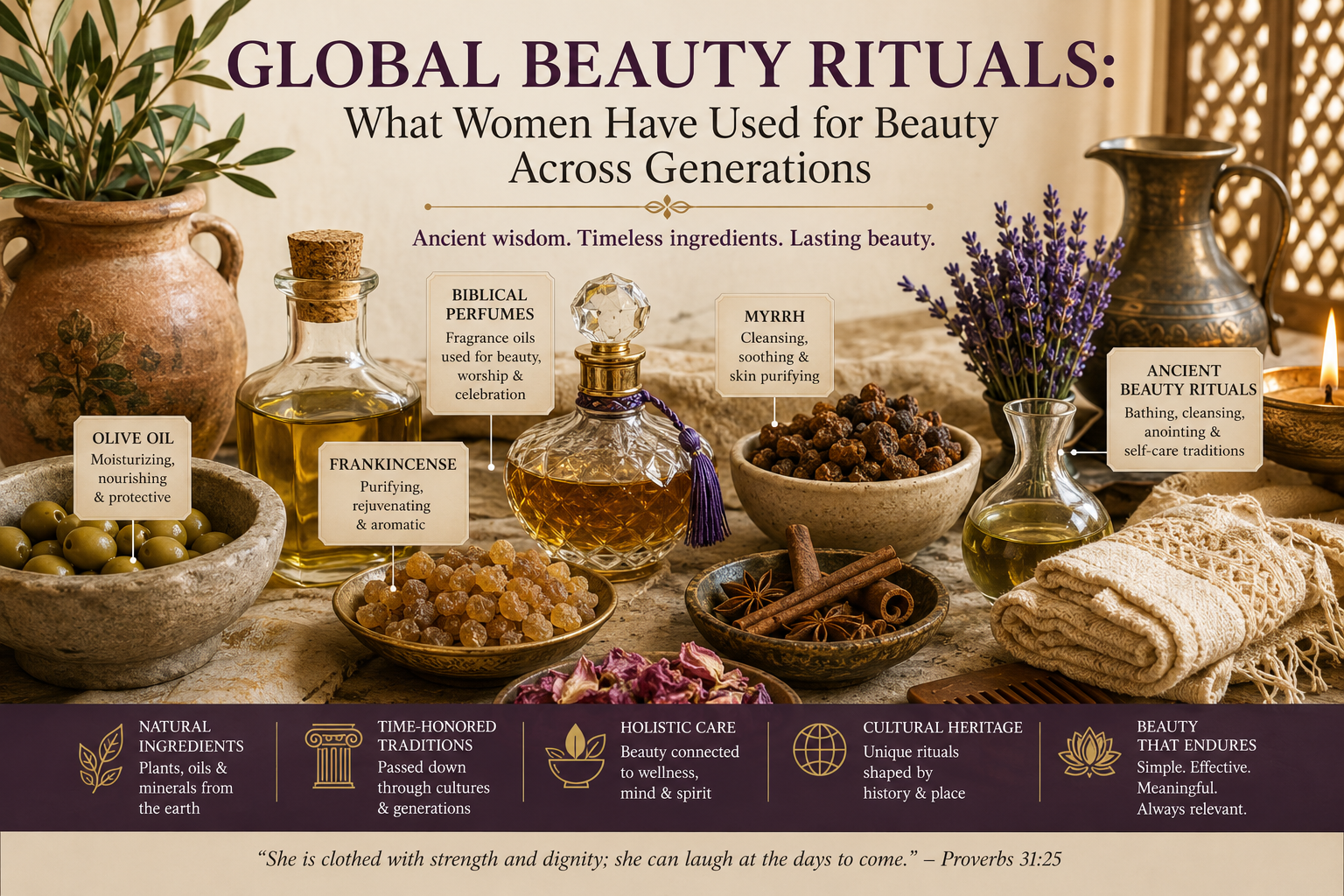
Modern skincare marketing likes to present itself as the beginning of the story, but women have been developing real, effective beauty rituals for centuries — using what their specific region and culture provided. This article is a gateway into a larger series exploring beauty traditions from around the world, starting with a close look at one particularly rich tradition: the Moroccan hammam.
Morocco: The Hammam Ritual
The Moroccan hammam is a centuries-old communal bathing tradition built around a specific, repeated sequence: steam to soften the skin, exfoliation, clay masking, and oil to finish.
Beldi (black soap). Made from crushed olives and olive oil, this soft, dark soap is applied to damp skin and left briefly before exfoliation, helping to soften the skin’s surface.
The kessa glove. A textured exfoliating glove used to physically remove dead skin after the black soap step — a distinctly different approach from chemical exfoliation, and one that’s been part of this tradition for generations.
Rhassoul (ghassoul) clay. Mined from Morocco’s Atlas Mountains and used since at least the medieval period, this mineral-rich volcanic clay is mixed with water or rose water into a paste and used as a mask, valued for its ability to draw out impurities without stripping the skin.
Argan oil. Pressed from the kernel of a tree that grows almost exclusively in southwestern Morocco, argan oil is the traditional finishing step — rich in vitamin E and fatty acids, and still hand-pressed by Berber women’s cooperatives using methods passed down for generations.
Rose water. Distilled from rose petals, used throughout the ritual both as a mixing base for clay masks and as a finishing mist.
Why Regional Ingredients Mattered
Long before global shipping made every ingredient available everywhere, beauty rituals were built entirely from what a specific region actually had — olives and argan trees in Morocco, rice and fermented ingredients in East Asia, shea in West Africa, oats and honey in parts of Europe. Understanding a tradition means understanding why that specific ingredient was the one available, not just what it does.
A Starting Point, Not the Full Story
This article is intentionally an introduction. Future pieces in this series will go deeper into Moroccan beauty specifically, along with traditions from other cultures and regions — each with the same commitment to real research rather than repeating viral, unverified beauty claims.
What Ties These Traditions Together
Across cultures and generations, the through-line isn’t a specific ingredient — it’s ritual itself. Time set aside, a specific sequence followed, ingredients sourced from the immediate environment rather than a global supply chain. That’s worth remembering the next time a 10-step routine or a trending serum promises to reinvent something women have actually been doing, thoughtfully, for a very long time.