There’s a particular kind of Christmas magic that doesn’t come from anything new. It comes from the ornament your mother had, the smell of a real tree next to an old radiator, the specific gold of an old string of lights before anyone called them “warm white.” Vintage Christmas decorating, done well, isn’t about buying a themed collection all at once. It’s about building a home that feels like it’s been collecting Christmas for decades — because in a way, it has.
Start With Glass Over Plastic
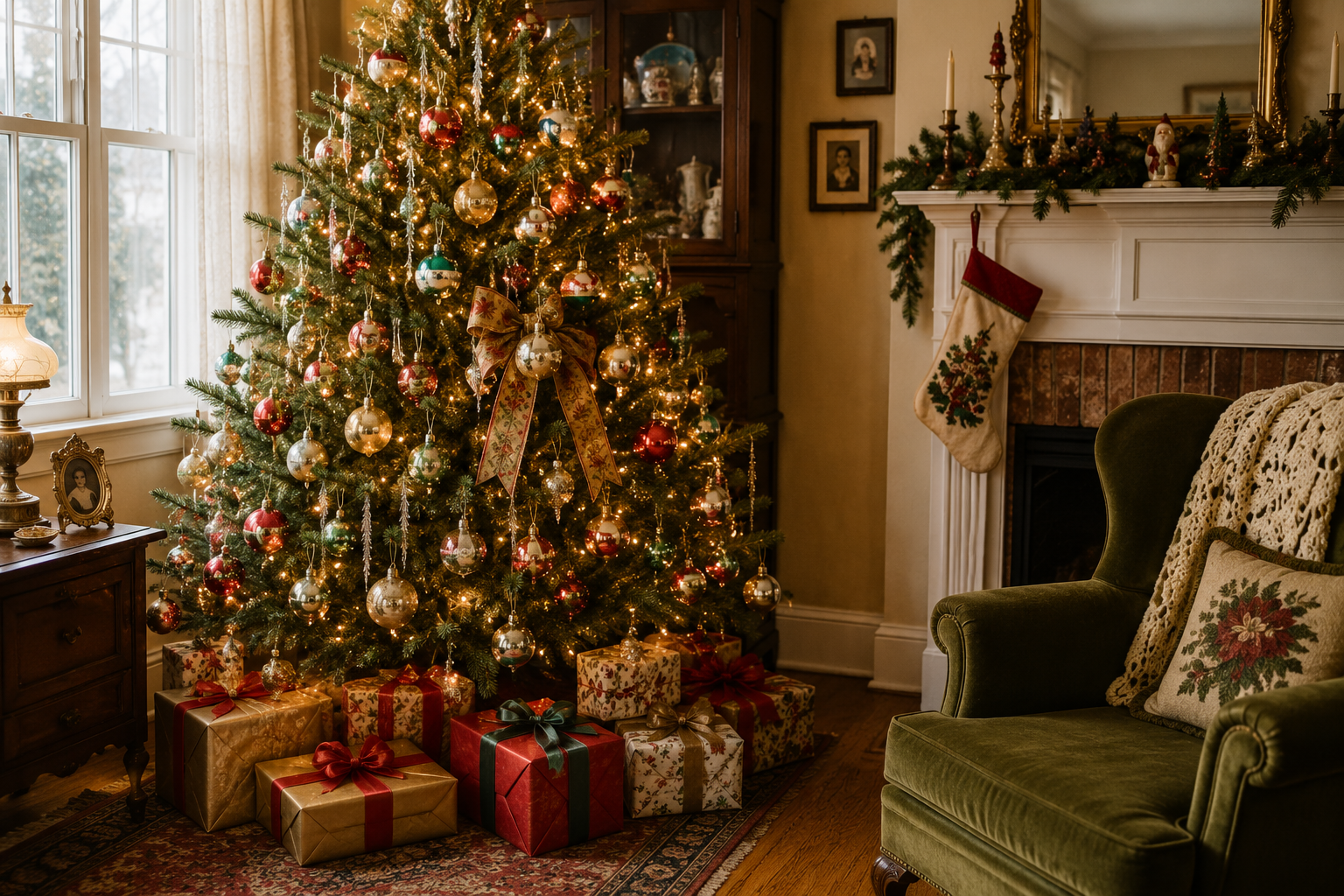
Mercury glass and hand-painted glass ornaments carry a softness and imperfection that modern plastic ornaments can’t fake. The slightly uneven paint, the visible brushstrokes, the way old glass catches light differently than a factory-perfect modern piece — these are the details that read as genuinely old rather than “old-looking.” If you’re starting a collection, glass is worth prioritizing over volume.
Let the Lights Be Warm, Not White
Old-fashioned C7 and C9 bulbs — the larger, rounder lights you might remember from a grandparent’s tree — cast a warmer, more golden glow than modern LED strands. If you can’t source vintage bulbs, warm-white LEDs get you close. Cool white or blue-toned lights will undercut the whole effect no matter how vintage everything else looks.
Tinsel, Used With Restraint
Tinsel has a complicated reputation — either loved without question or banned from the house entirely. Used sparingly, a few icicle strands draped rather than clumped, it adds exactly the kind of glinting, old-fashioned shimmer that photographs of 1960s and ’70s Christmas trees are full of. Used heavily, it can look chaotic. A little goes further than people expect.
Traditional Colors Do More Work Than You’d Think
Deep reds, forest greens, and warm gold read as timeless in a way that trend-driven seasonal palettes (think icy blues, all-white “Scandi” trees, or millennial pink) simply don’t. This doesn’t mean every ornament needs to match — it means keeping your overall palette anchored in those traditional tones so the tree feels cohesive rather than themed.
Ceramic and Handmade Pieces Add Real Warmth
A ceramic nativity, a handmade felt stocking, a slightly lopsided clay ornament from decades ago — these pieces carry warmth that mass-produced decor can’t replicate. If you have inherited pieces like this, they deserve prime placement, not a back shelf.
Ribbon, the Old-Fashioned Way
Wide, wired ribbon in velvet or satin, tied in generous bows rather than perfectly symmetrical florist knots, is a small detail that shifts a tree from “decorated” to “gathered over time.” Look for ribbon with some texture — velvet, grosgrain, a subtle plaid — over anything glossy or synthetic-looking.
Greenery That Isn’t Perfectly Uniform
Real or realistic faux garland with visible variation — some fuller sections, a few sparse ones, pinecones and berries tucked in unevenly — reads as far more authentic than a perfectly uniform garland straight off the spool. Nature isn’t symmetrical, and neither was the greenery your grandmother clipped from the yard.
The Real Secret: Let It Be Collected, Not Curated
The single biggest thing that separates a genuinely nostalgic Christmas from a themed one is restraint on the buying side. A vintage-feeling home doesn’t get built in one shopping trip — it’s the ornament from twenty years ago next to the one you found last month at an estate sale next to the one your kid made in third grade. If everything looks like it came from the same catalog on the same day, no amount of “vintage-style” labeling will make it feel truly nostalgic. Give it time. Let it be a little imperfect. That’s the whole point.